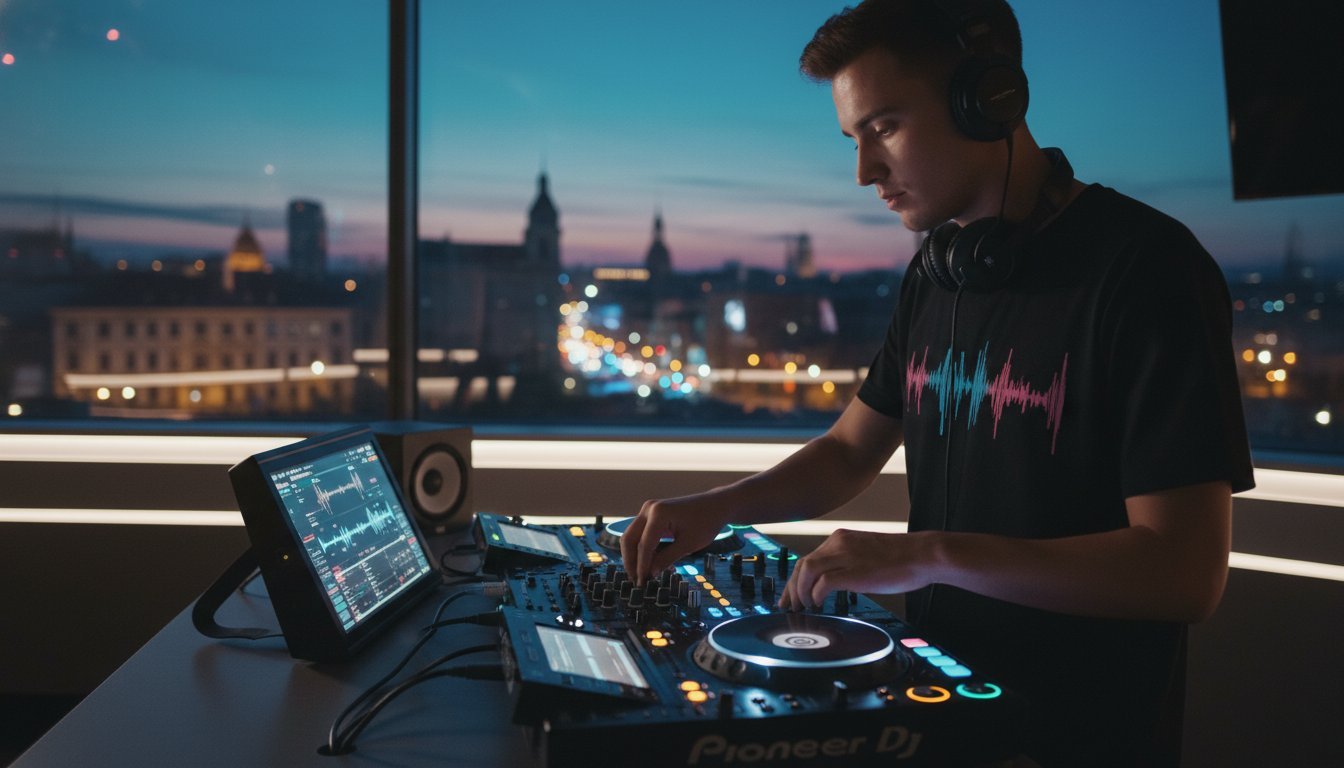
What if the artist behind the decks is actually managing more data points in a single transition than most people do in a full workday? If you have ever looked at a pair of Pioneer CDJ-3000s and wondered, “what does a DJ do besides press play,” you are not alone. It is easy to feel like a “fake” when you are staring at a complex mixer for the first time, especially with professional setups now costing upwards of 35,000 lei. You probably feel the frustration of wanting to level up while lacking a professional space to truly open up the sound.
We get it. The gap between a hobby that lights your soul and a professional career can feel massive. This guide promises to bridge that gap by showing you the technical mechanics of mixing, the secrets of crowd psychology, and the intense preparation required before the first beat drops. We will explore how to use Rekordbox 7.2.5 like a pro, the reality of securing $400 booking rates, and the exact steps you need to take to bring your passion to life. 🎧 Practice starts now; the stage is waiting for you!
Key Takeaways
- 🎧 Master technical mechanics like beatmatching and phrasing to create seamless, high-energy transitions.
- 🧠 Discover the secrets of crowd psychology and how to use the feedback loop to own the dancefloor.
- 📂 Understand exactly what does a DJ do during the “invisible hours” of music curation and library management.
- 🚀 Learn why professional DJing is about reimagining sound live rather than just playing a static playlist.
- 💎 Bridge the gap from bedroom hobbyist to club pro by practicing on industry-standard Pioneer CDJ-3000s.
Beyond the Booth: What Does a DJ Actually Do?
Throw away the idea that you’re just a human jukebox. In 2026, the real answer to what does a DJ do involves a high-stakes mix of curation, technical mastery, and live performance. You aren’t just selecting tracks. You are reimagining sound in real time. While basic definitions describe what a DJ is as someone playing recorded music, the modern artist is a sonic architect. You take a track people know and transform it into something they’ve never heard before through loops, effects, and creative layering.
The “press play” misconception is a ghost from the past. It ignores the massive emotional impact you have on the room. You control the atmosphere. You decide when the energy peaks and when the crowd needs to breathe. It’s a psychological game played with faders, EQ knobs, and timing. Every choice you make behind the decks changes the pulse of the event. You aren’t just a background service; you are the heartbeat of the party.
To see the difference between just playing a track and performing a high-level set, watch this satisfying response to the “press play” debate:
The Core Mission of Every Set
Your primary job is flow. You create a continuous, gapless stream of music that keeps the momentum moving forward. 🚀 Keep the vibe consistent. If the venue expects deep house, you don’t drop a heavy techno kick unless the energy has been built to sustain it. You are the bridge. You connect the artist’s studio work to the physical reaction of the dancefloor. It requires constant focus and a deep understanding of your library to ensure the music never stops and the energy never drops.
Different Roles, Different Skills
Not every booth is the same. Your skill set shifts depending on the stage you stand on. A club environment demands patience and smooth blends, while a private event requires rapid pivots and broad musical knowledge. Understanding these roles helps you find your path in the industry.
- Club DJs: You are the masters of the long-mix. You spend 32 or 64 bars blending tracks to create a seamless transition that the crowd barely notices. It’s about the journey, not just the destination.
- Mobile/Event DJs: You are the multi-genre experts. You need to know 50 years of music history to keep a diverse room happy. You read the room and pivot your style in seconds to keep every generation dancing.
- Turntablists: You treat the deck like a musical instrument. Scratching, beat-juggling, and trick-mixing turn your set into a visual and technical spectacle. It’s performance art at its most rhythmic.
Ready to find your style? Book your session at Book a DJ Studio and start defining your sound on industry-standard gear. The stage is waiting for you!
The Technical Mechanics: Mixing, Beatmatching, and Transitions
The technical side is where the magic happens. When people ask what does a DJ do, they’re often looking at the complex grid of buttons on a professional mixer. It starts with beatmatching. This is the foundation of aligning two tracks so their beats per minute (BPM) match perfectly. If you’re off by even 0.1 BPM, the tracks will “trainwreck,” creating a messy sound that kills the dancefloor energy. You use the pitch fader to sync the tempos, ensuring the transition is invisible to the listener.
Beyond just matching speed, you have to master phrasing. Most electronic music follows a strict 4/4 structure, usually in 16 or 32-bar blocks. Mixing at the wrong time sounds jarring. You need to wait for the “drop” or the “breakdown” to swap your basslines. This technical precision is a huge part of the day-to-day activities of a DJ. You also handle EQing, which means using the Low, Mid, and High knobs to carve out space for each track. You don’t just slam two songs together. You swap the bass from Track A to Track B while keeping the melodies clear. Gain management is the final touch. You must ensure the volume stays consistent across different tracks so the audience doesn’t get a sudden, painful blast of noise.
Mastering the Club-Standard Setup
Learning on a budget controller at home is fine, but it won’t prepare you for the booth. Professional setups, like those featuring Pioneer CDJ-3000s, cost upwards of 35,000 lei. That’s a massive investment for a beginner. However, mastering these units is non-negotiable if you want to play at festivals or top-tier clubs. You need to understand how the faders, crossfaders, and FX units work in a high-pressure environment. If you want to Master the Club Standard Equipment, you need hands-on time with the real gear.
The Art of the Transition
Transitions are your signature. A long blend might last 64 bars, slowly introducing the hi-hats of a new track until the crowd realizes they’re dancing to something different. Quick cuts are for high-energy moments or hip-hop sets where you “slam” the next track on the 1-beat. Use filters and delay to create tension. A well-placed Echo effect before a drop can make the room explode. Always trust your headphones. “Cueing” the next track allows you to check the beatmatch and EQ levels before the audience hears a single note. If you’re ready to move beyond the bedroom, practice your sets in a pro environment to build that muscle memory.
Reading the Crowd: The Psychology of the Dancefloor
If you think the job ends with technical mastery, you’re missing the most electric part of the gig. Beyond the technical skills of a DJ, your real power lies in reading the room. You have to analyze the energy before you even touch the first fader. Is the crowd huddled at the bar or tentatively tapping their feet? This is the start of the “Feedback Loop.” Every track you play is a question. The audience’s reaction is the answer. If the floor clears, you’ve asked the wrong question. If they scream, you’ve found the pulse.
Professional sets aren’t just a constant 128 BPM blast. You must manage peaks and valleys throughout the night. Keeping the energy at 100% for four hours leads to exhaustion. People will leave the floor to find air. You have to know when to drop a “safe” anthem to pull people back and when to take a risk with an underground track that defines your sound. This psychological tug-of-war is exactly what does a DJ do to keep a party going until the sun comes up. It’s about the balance of tension and release.
Vibe Control and Energy Management
Warm-up sets require restraint. You’re setting the table, not eating the meal. Keep the BPM lower and the tracks groovy. Peak-time energy is about total release. Spot the “influencers” on the floor. These are the three or four people dancing the hardest. If you win them over, the rest of the room follows. If the crowd stops moving, don’t panic. Drop the BPM, change the genre, or use a recognizable vocal to reset the vibe. 🚀 Own the room and bring your passion to life.
Improvisation vs. Preparation
Never pre-plan every track in order. A rigid set is a recipe for disaster if the crowd isn’t feeling your specific vibe that night. Instead, keep your Rekordbox folders organized by energy level. This allows for quick, on-the-fly decisions that keep the floor packed. Intuition is a muscle you build by playing out. You learn to pick the “perfect” next song by watching shoulders and feet. 🎧 Practice this at Book a DJ Studio to sharpen your instincts before the big night. The stage is waiting for you!
The Invisible Hours: Preparation and Curation
The hour you spend on stage is just the tip of the iceberg. If you want to know what does a DJ do during the week, the answer is digging. You’re searching for those tracks that no one else has. You’re scouring Bandcamp at 2 AM or checking your promo pools for the latest white labels. Curation is your unique selling point. It’s why people book you instead of just using a streaming algorithm. You need to Master Your Mix and Prepare Your Set long before you step into the booth.
Technical prep is equally intense. In 2026, library management in Rekordbox 7.2.5 is a non-negotiable skill. You aren’t just dragging and dropping files. You’re setting Hot Cues for quick navigation and Memory Points to remind you where a vocal starts or a beat drops. 🎧 Pro tip: Always use a high-speed 32GB USB stick pre-scanned in Rekordbox. If your drive isn’t analyzed, you’ll lose access to waveforms and sync features on club-standard gear. Don’t risk a technical fail in front of a packed room.
Building a Professional Music Library
Organization is your secret weapon. Sort your tracks by energy level, mood, or key rather than just genre. This allows you to pivot your sound instantly based on the crowd’s reaction. Quality matters more than quantity. Always aim for lossless formats like WAV or AIFF. While a 320kbps MP3 might sound fine on your laptop, it will fall apart on a massive festival PA system. Your library is your legacy; treat it with respect. It’s the foundation of your professional identity.
The Power of Regular Practice
Muscle memory is the difference between a good set and a legendary one. You need to know your gear inside out so you can focus on the crowd instead of the buttons. 🚀 Record your sets. It’s the most honest feedback you’ll ever get. Listening back helps you spot clashing keys or messy transitions that you missed in the heat of the moment. Test your blends. Try that high-risk transition five times in private before you attempt it live. Practice makes permanent. If you want to refine your skills, book your practice session today and bring your passion to life.
Level Up Your Skills at Book a DJ Studio Timișoara
You have the technical knowledge. You understand the psychology. Now, you need the stage. When you ask what does a DJ do to actually break into the professional circuit, the answer is simple: they practice on the gear they will use at the festival. Most bedroom setups don’t have the tactile feel of club-standard Pioneer CDJ-3000s. We provide hourly studio access to the exact equipment found in the world’s best booths. This is your chance to move beyond the entry-level controller and build the muscle memory required for a high-stakes gig. 🎧 Practice like a pro to become a pro.
Don’t just play; document your progress. We offer professional audio recording and 4K video recording to help you create the perfect promo set. In 2026, a booking agent doesn’t just want to hear your transitions. They want to see your energy and your brand. Use our live streaming setup to connect with your community in real-time. This is how you boost your career and turn a hobby that lights your soul into a professional reality. The tools are here. The gear is ready. Your breakthrough is waiting.
Why a Professional Studio Beats Practice at Home
Your neighbors don’t want to hear your 2 AM techno transitions. We do. In our studio, you can blast the monitors as loud as you need without a single noise complaint. There is a massive psychological boost when you step into a dedicated creative space. At home, you have laundry, phones, and endless distractions. Here, it is just you and the music. This level of focus is essential for mastering the what does a DJ do skill set. You will find that an hour of deep practice in a pro booth is worth five hours of distracted mixing at your desk.
Get Started Today
The stage is waiting for you. Don’t let your talent stay hidden in your bedroom. Whether you want to record a clean promo set or just feel the power of a professional PA system, we have the tools you need. Check out our Gallery to see the pro booth in action. Ready to play? Book Now and start your journey. Your next breakthrough is just one session away. 🚀 Bring your passion to life!
Own the Booth: Your Future in the Mix
Understanding what does a DJ do is the first step toward the stage. You’ve seen that the role is a high-stakes blend of technical beatmatching, deep library curation, and the psychological mastery of a crowded dancefloor. It isn’t just about the tracks you play. It’s about how you reimagine them live. Success in 2026 requires more than just bedroom practice; it demands hands-on experience with industry-standard gear.
Book a DJ Studio is the heart of the Timișoara DJ community. We give you direct access to professional Pioneer CDJ-3000s and high-end mixers. You can record your progress with 4K video and pro-grade audio to build a brand that booking agents can’t ignore. Stop wondering if you’re ready and start proving it. Ready to take the decks? Book your professional studio session in Timișoara now! Your favorite mixer is waiting for you. Bring your passion to life and let the music speak for itself! 🚀🎧
Frequently Asked Questions
Is DJing hard to learn for a beginner?
The basics of DJing are accessible; you can learn to beatmatch and understand phrasing within a few weeks of consistent practice. However, mastering the art of crowd reading and seamless technical transitions takes years of dedication. It’s a hobby that lights your soul and offers endless room for growth. Start with the fundamentals and build your confidence on professional gear to speed up your progress. 🎧 Practice makes permanent!
What equipment does a DJ need to start?
To get started in 2026, you need a DJ controller, a laptop, and a solid pair of headphones. An entry-level controller like the Pioneer DJ DDJ-FLX4 costs around $349. A complete beginner setup including software usually ranges from $500 to $900. While you can start small at home, you’ll eventually need to practice on club-standard CDJs to prepare for professional gigs and festivals. 🚀 Boost your skills early!
Do DJs actually mix the music live?
Yes, professional DJs mix music live by using faders, EQ knobs, and filters to blend two or more tracks together. This process is exactly what does a DJ do to ensure there are no gaps in the music and the energy stays consistent. They use headphones to “cue” the next track and match its BPM to the current song. It’s a high-stakes performance that requires total focus and technical precision.
What is the difference between a DJ and a Producer?
A DJ focuses on the performance and curation of music for a live audience, while a producer focuses on creating original tracks in a studio. A DJ uses tools like mixers and CDJs to blend sounds; a producer uses Digital Audio Workstations (DAWs) like Ableton Live 11 to compose. Many artists do both to boost their brand, but the technical skill sets for the stage and the studio are completely different.
How much do DJs earn per gig?
Earnings vary based on the event type and location. In 2026, a professional DJ in the USA earns between $400 and $800 for a standard 4-hour private event. Wedding DJs command a premium, with national averages around $1,800. In Timișoara, the average price for a wedding DJ is €642, while the average hourly rate for a club or event DJ is approximately $94. Your rate grows as your reputation does!
Do I need to know how to play an instrument to be a DJ?
You don’t need to play a traditional instrument like the piano or guitar, but understanding rhythm and music theory is a huge advantage. The decks and mixer serve as your instrument. You’ll use them to manipulate sound, create loops, and layer tracks in creative ways. Having a “musical ear” helps you identify clashing keys and perfect your transitions. The stage is waiting for your unique sound!
What software do most professional DJs use?
Most professionals rely on Rekordbox 7.2.5, Serato DJ 4.0, or Traktor Pro 4. Rekordbox is the industry standard for preparing music for club booths equipped with Pioneer gear. In 2026, software also integrates with streaming services like Algoriddim’s Djay Pro 5.6. Regardless of the software you choose, ensure your library is organized with Hot Cues and Memory Points to make your live sets run smoothly. 📂 Stay organized!
How do I get my first DJ gig in Timișoara?
Getting your first gig requires a professional promo set and active networking in the local community. Record a high-quality 4K video of your mix to show promoters exactly what does a DJ do when you’re behind the decks. Visit local venues, connect with other artists, and share your passion. Having a polished, recorded performance is the best way to prove you’re ready for the breakthrough you’ve been dreaming of!