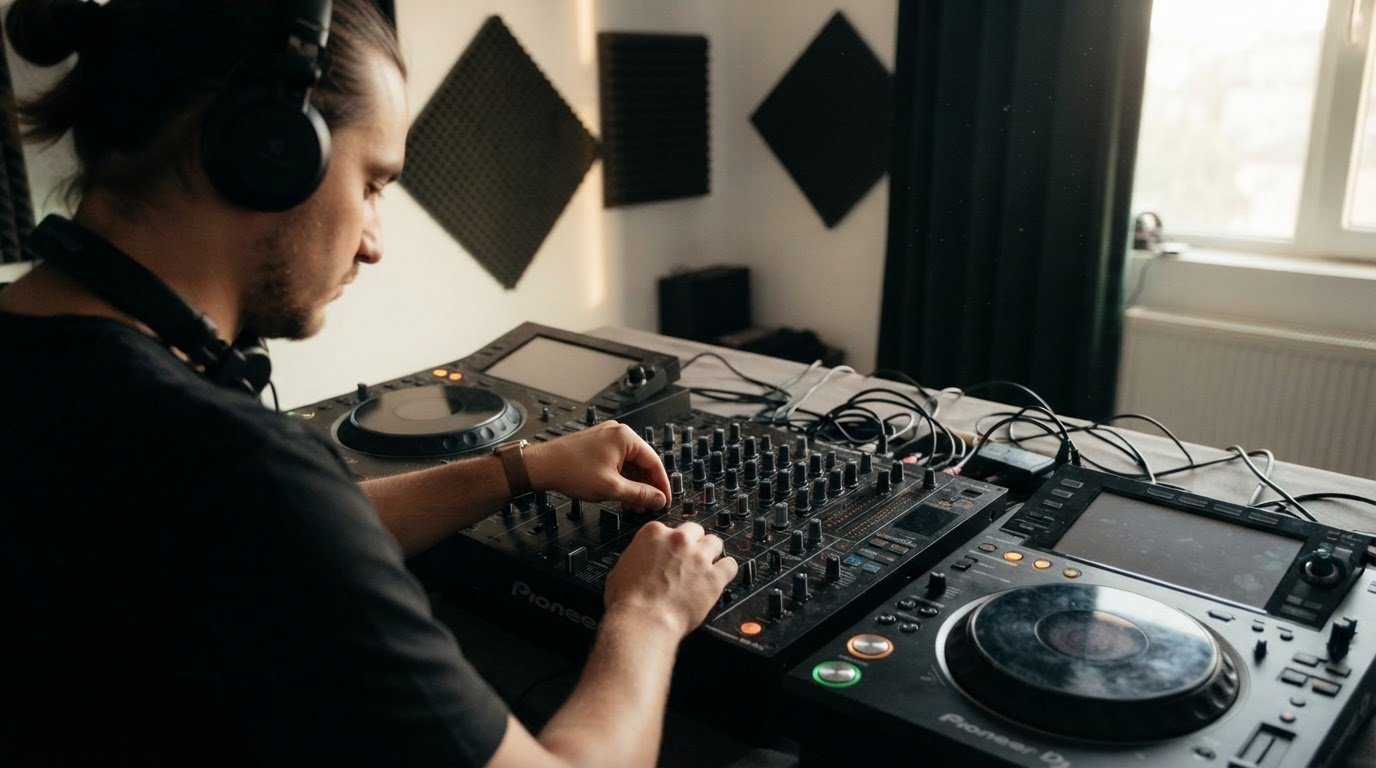

Gear obsession can fuel your craft, but only when it leads to better practice. In the gear obsession vs skill development debate, skill takes the lead when you study accomplished performers, experiment with purpose, and keep refining your technique.
It makes sense to care about your setup. The right tools can spark ideas and help you express them, but new equipment can’t replace the instincts built through repetition. Progress comes when curiosity shifts from collecting gear to understanding how sound, technique, and musical choices work together.
Turn intense interest into creative momentum: study what makes performers distinctive, practise with a clear focus, and choose equipment for what it helps you achieve. Build your ear, sharpen your technique, and make every tool earn its place in your workflow. Your next level starts with what you do, not just what you own.
Key Takeaways
- Let deep curiosity guide your craft, and study the details that make accomplished performers distinctive.
- Refine creative work through focused practice and deliberate, one-change-at-a-time experiments.
- Choose gear for the specific creative task it helps you accomplish, not for its price or appeal alone.
- Use a dedicated studio session to practise, record audio, or capture your performance in 4K video.
Obsession as a skill for developing a craft
Obsession can sharpen your craft when it focuses your attention on sound, timing, and musical choices, not just equipment. For a DJ, that might mean replaying a transition to hear where its phrasing slips, then testing a different cue point. The useful question isn’t how much gear you own, but what close listening helps you notice and improve.
An intense interest can hold your attention for months before shifting to a new subject. That focus can help you explore a craft deeply, whether you’re learning beatmatching or studying how a performer builds tension. Parents and teachers can support young people by making room for their chosen pursuits instead of repeatedly rotating activities just to broaden their interests.
Turn fascination into a repeatable habit of observation. Choose an accomplished DJ and study one element, such as track selection, phrasing, or how they manage energy across a set. Then test that element in your own mixes. Write down what you heard, what you tried, and what changed. This makes inspiration useful: you’re analysing a choice, not simply copying a style.
A sensible gear budget covers your current practice needs without paying for features you can’t yet use or explain. Prioritise the essentials that let you cue, mix, and hear your work clearly.
Upgrade when your current setup repeatedly gets in the way of a specific skill or creative decision. For example, if a monitoring limitation makes it hard to judge transitions, address that constraint before buying gear for a vague sense of progress. Keep the focus on your craft: a tool earns its place when it helps you practise, listen, or perform with greater control.
Keep a brief record of the listening questions, techniques, or discoveries that held your attention. It can give you a clear starting point when you return to a skill or idea later. Treat each focused period as a chance to practise and build a specific skill.
Practice, testing, and refining creative work
Skill grows through focused repetition, useful feedback, and changes you can evaluate. For a DJ, each transition can become a small test.
Deliberate Practice and Equipment Quality
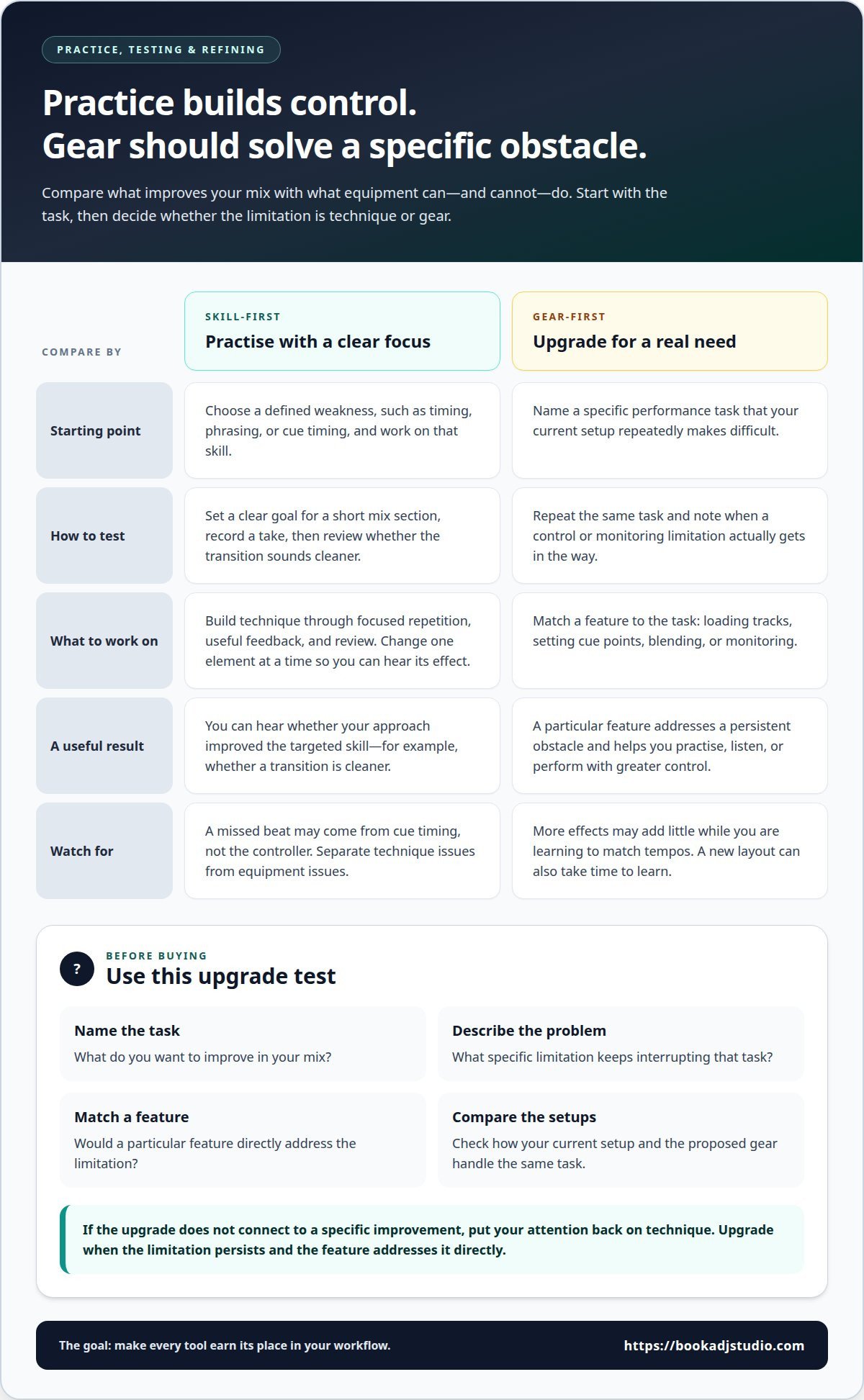
Deliberate practice means working on a defined weakness, then reviewing whether your approach improved it. Equipment matters when it affects what you can hear or control, but better gear alone won’t refine your timing or phrasing. Rodney Dangerfield advised beginners to develop five minutes of good material and keep improving it. Apply that idea to a short section of a mix: set a clear goal, record a take, and check whether the transition sounds cleaner.
Identifying Real Performance Limitations
A real equipment limitation is a specific obstacle that repeatedly interrupts a performance task. If a control is difficult to use accurately, note when it causes trouble and test the same task again. Separate equipment issues from technique: a missed beat may come from cue timing, not the controller. Upgrade only when the limitation persists and a particular feature would address it directly.
Prioritizing Practice, Coaching, and Spending
Beginners make better decisions by directing effort toward the skill that currently needs attention. Practise that skill first, then use feedback from a coach or experienced performer to spot habits you may miss. Spend on equipment only when it supports that work or removes a clear obstacle. A focused practice session in a dedicated DJ studio space can also give you a consistent setup for testing a mix.
The Cost of Delaying Practice
Endless gear research postpones the practice and feedback that reveal what you actually need. Without real mixes to review, it’s easy to mistake an unfamiliar technique for an equipment problem. Aaron Franklin’s advice for refining a recipe was to change one element at a time. Apply that approach to a mix: adjust one transition choice, listen again, and note the result. Consistent review turns practice into progress you can hear.
Does expensive gear improve performance for beginners?
Higher-priced gear can offer useful controls, but it can’t make performance decisions for you. A premium DJ mixer won’t choose a track that matches the phrasing or fix a rushed transition. The gear obsession vs skill development debate becomes clearer when you ask whether a feature solves a real need, such as making cue monitoring easier during practice.
Separate capability from complexity. A controller with extra effects may seem inspiring, but those effects add little if you’re still learning to match tempos. Start with the tasks your setup must handle: loading tracks, setting cue points, blending, and monitoring. Compare each feature with those tasks, not with a performer’s studio tour.
Comfort matters, too. If small controls make accurate EQ adjustments difficult, a different layout might support more confident mixing. But if your transitions drift because you’re not counting phrases, a more expensive jog wheel won’t teach you phrasing. Identify the actual friction before deciding what deserves your budget.
Familiarity also shapes performance. Switching to a more advanced unit can mean learning a new menu structure, button layout, and signal flow. During that adjustment, you may perform less smoothly, even if the equipment offers more options. Give yourself time to learn a new setup before deciding whether it improves your mix.
Think of gear as part of a workflow, not a shortcut. A beginner preparing a recorded set may value reliable monitoring and clear audio capture more than additional performance effects. Someone practising transitions may benefit more from a simple, consistent layout. The gear obsession vs skill development question is best answered by the task you actually want to improve.
Before buying, name the task, describe the problem, and identify the feature that could address it. Then compare how your current setup handles that task with how the proposed gear would. If you can’t connect the upgrade to a specific improvement, put your attention back on technique and keep building your set.
What does research say about deliberate practice versus equipment quality?
Practice and equipment solve different problems: repetition develops your decisions, while tools shape how you carry them out. In a DJ set, a mixer can provide useful controls, but it can’t decide when a transition should begin. The useful comparison isn’t gear versus practice as equal substitutes. It’s whether a tool supports the skill you’re working to apply.
Skills measurement can show what someone can demonstrate, but measuring a skill alone doesn’t necessarily improve performance. What matters is applying it repeatedly and consistently in real conditions. For example, knowing how to beatmatch in an isolated exercise matters less if you can’t maintain timing while preparing the next track. Review the performance, not just the equipment or the isolated technique.
The knowing-doing-owning model makes a practical distinction: learning or experimenting isn’t the same as taking ownership of a skill in everyday work. For a DJ, ownership means using cue points, phrasing, and track selection reliably across different practice sets. Better equipment may support that process, but consistent application shows that the skill has become part of your craft.
After each recorded mix, use a simple review loop. Choose one skill, such as cleaner phrase alignment, and listen for it across the set. Note where it worked and where it slipped. Then practise that passage again before changing equipment. If the same tool limitation keeps interrupting the task, consider whether a specific feature would remove it. This connects gear decisions to evidence from your own performance.
Make your next session a focused test: practise one technique, record the result, and listen for the change. Book a focused DJ practice session to work on your set in a dedicated studio environment.
Organisations can measure skills for recruitment, rewards, and broader workforce needs, but measurement alone does not necessarily improve performance. They should identify and track the competencies required for different roles while recognising that measurement does not guarantee better performance.
Rodney Dangerfield said he wrote about 100 new jokes to prepare material for a Tonight Show appearance. He also said he needed about 30 new jokes for his stand-up routine and conversation on The Tonight Show, and put about 10 jokes into his stand-up bit for an appearance. That preparation offers a parallel: developing a skill involves repeated work, not merely assessing what is already there.
Book a DJ Studio
Book a DJ Studio gives you a dedicated space to practise, test your setup, and focus on performance rather than gear research. Hourly Studio Access and Session Packages suit different practice plans, while Audio Recording and 4K Video Recording let you review how your set sounds and looks.
Use a session to test one specific skill, such as smoother phrasing or more confident transitions, on a consistent setup. Listening back to a recording can help you spot what to refine before deciding whether new equipment would solve a real limitation.
Ready to put your next practice session into motion? Book a DJ Studio.
Shape Your Sound Into a Signature
Your next breakthrough may come from making a creative choice that feels unmistakably yours. Let your taste lead: the tracks you connect, the energy you build, and the moments when you leave space. Those decisions turn technique into a point of view.
The real test of gear obsession vs skill development is what your audience hears in the finished set. Give yourself a clear creative direction, then make choices that bring it to life. Your setup supports the performance, but your identity comes through in how you use it.
Ready to put that direction into action? Contact Book a DJ Studio and plan your next session.
Keep creating with intention. The sound you’re shaping is yours to own.
Frequently Asked Questions
How does skill development differ from buying better gear?
Skill development changes how you make decisions; new gear changes the options available to you. For example, learning to shape a set’s energy means choosing when to build, hold, or shift intensity. A new mixer may offer different controls, but it won’t make those musical choices for you. Track your progress by listening for a more intentional set flow, not by counting new features.