
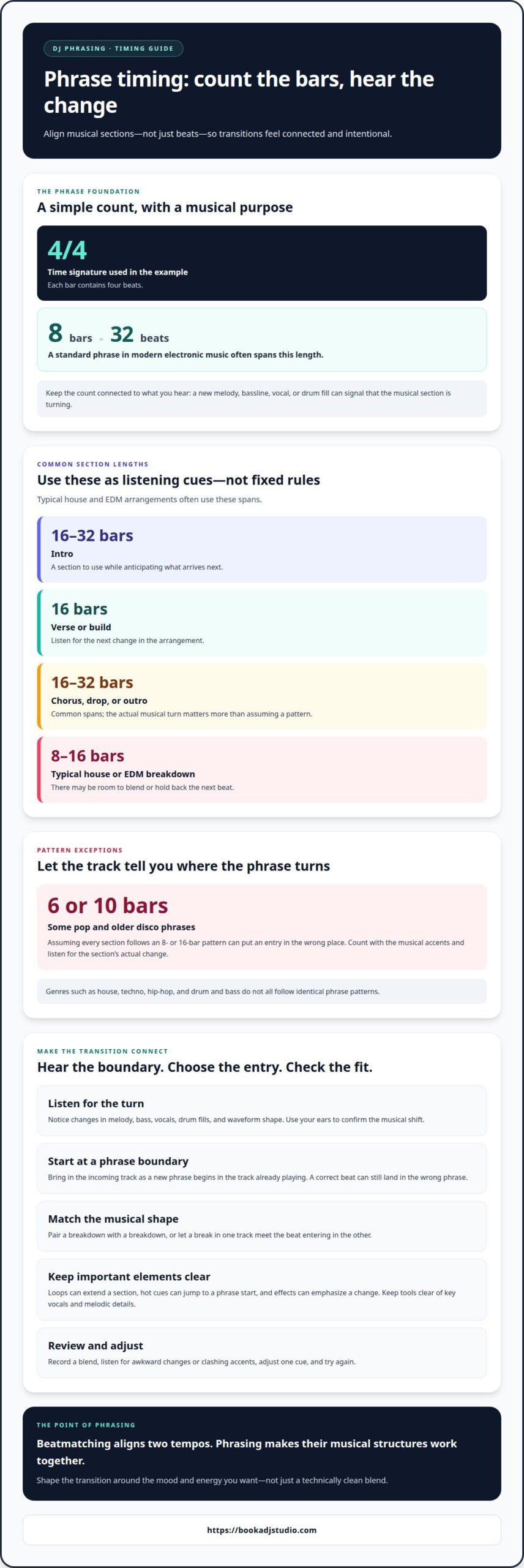
A clean beatmatch can still leave a transition feeling out of step. The art of phrasing in DJing is aligning the musical sections of two tracks so changes in rhythm, melody, and energy land together. In 4/4 time, a bar contains four beats, and a standard phrase in modern electronic music is often 8 bars, or 32 beats.
You already know a crowd responds to more than tempo. People feel how a set builds, breaks, and moves. Phrase with intention, and transitions can sound smoother and more connected, not merely technically accurate.
Learn what a phrase is, how to recognize its boundaries, and when to start an incoming track so its beats and breaks align with the track already playing. Then practise the technique to shape transitions that carry the room’s energy forward.
Key Takeaways
- Use changes in melody, bass, vocals, and waveform shape to spot where a track’s musical sections turn.
- Match breaks with breaks, or bring a new beat in as the playing track enters a break, to guide the energy smoothly.
- Start the incoming track at a clear phrase boundary so its key elements land in sync with the track already playing.
- Shape transitions around the mood you want to create, not just the mechanics of a clean beatmatch.
Aligning breaks and beats during transitions
Use phrase boundaries to make a transition feel intentional, not merely beatmatched. In 4/4 time, each bar has four beats, and a standard electronic phrase often spans 8 bars, or 32 beats.
-
Practice Hearing and Predicting Phrase Changes
Play a track and count its 4/4 bars while listening for a new melody, bassline, vocal, or drum fill. Mark the change you expect at the next phrase boundary, then listen to see whether it arrives there. Waveform changes can help reveal louder or quieter sections, but use your ears to catch the musical shift. Avoid counting beats without noticing what changes.
-
Time Track Starts to Align Phrases
Start the incoming track as a new phrase begins in the track that’s playing. For example, bring in a simple drum intro as the outgoing track nears the end of a phrase, so the next major melodic element arrives at a musical turning point. Listen for the incoming track’s first vocal or bass entry. A common beginner mistake is starting on the right beat but in the wrong phrase, leaving important elements out of sync.
-
Align Phrases Between Tracks
Match comparable sections to preserve the transition’s shape: a breakdown with a breakdown, or a break in one track with the beat entering in the other. A typical house or EDM breakdown lasts 8-16 bars, giving you room to blend or hold back the next beat. Loops can extend a useful section, hot cues can jump to a phrase start, and effects can emphasize a change. Keep each tool clear of key vocals and melodic details.
-
Adapt Phrasing Across Genres
Listen for each track’s actual changes instead of assuming house, techno, hip-hop, and drum and bass all follow identical phrase patterns. Compare drum fills, vocal entries, bass changes, and breakdowns to find a suitable start point. To practise, prepare tracks from different genres, count their bars, and predict each change before it happens. Test a transition, then adjust your cue if the musical accents clash.
Phrasing as an aspect of beatmatching
Beatmatching aligns two tempos; phrasing makes their musical structures work together. The art of phrasing in DJing is choosing when those structures meet, so a steady blend also feels musically connected.
- Lock the tempos, then listen beyond the kick. Once the beats run together, notice when each song introduces or removes a musical element. In a typical house or EDM arrangement, an intro may span 16-32 bars, while a verse or build often spans 16 bars. Use these sections to anticipate the next change.
- Read the arrangement, not just the grid. A chorus or drop may run 16-32 bars, and an outro may also last 16-32 bars. These are common patterns, not fixed rules. Listen for a new bassline, vocal, or melody, then decide whether the incoming section complements that change or competes with it.
- Keep your count flexible. Some pop and older disco tracks use 6-bar or 10-bar phrases, so assuming every section follows an 8- or 16-bar pattern can misplace an entry. Count along with the musical accents and listen for the section’s actual turn. A waveform can help locate a change, but your ears judge whether the sections fit.
- Make one adjustment at a time. If an incoming vocal clashes with the outgoing hook, move the cue to a later musical entry. If the transition loses drive, bring in a simpler drum section before adding more layers. Practicing the art of phrasing in DJing means reviewing those choices: record a blend, listen for awkward changes, then adjust one cue and try again. A dedicated DJ studio practice session gives you room to focus on timing choices in a mix.
Starting a track at a phrase boundary
Choose an entry point that connects the incoming track’s first musical change to the track already playing. Use phrasing to build anticipation, avoid abrupt clashes, and give each transition a clear direction.
- Find a clear phrase start in the track that’s playing. Listen for a change, such as a new vocal, drum fill, or entering bassline. Count the bars leading up to it, then use the next phrase boundary as your launch point. This gives your timing a musical reference, rather than just a visual marker.
- Set a cue at the incoming track’s opening or another clean entry point. Start it precisely as a new phrase begins in the playing track. With a simple 16-bar structure, count through the current phrase and prepare your cue before its final bar. Keep the launch steady, then listen for the tracks’ next changes.
- Listen for what follows the start, not just the first beat. If the incoming track introduces a vocal as the playing track reaches its own vocal, the layers may compete. Move the cue to a quieter intro or choose a later entry. A strong boundary aligns the sections, while a well-chosen entry keeps their elements from crowding each other.
- Use hot cues or waveform markers as reminders, not replacements for listening. Mark where the incoming track’s drums begin, then compare that point with the playing track’s phrase change. Waveforms can show shifts in loudness; a vocal pickup or cymbal crash can confirm the musical accent. Adjust your launch point if those cues don’t agree.
- Record a practice blend and replay the transition around its entry. Note whether a new melody, beat, or vocal arrives too early or late. Then change one cue point and try again. A dedicated DJ practice setup can help you focus on those timing choices without adding unrelated distractions.
Connecting with an audience through DJing
Phrasing can shape more than a seamless blend. The order and timing of musical changes help a set build tension, release it, and create a mood.
-
Shape Energy Through Phrasing
Decide whether the next transition should raise, hold, or lower the room’s energy. For a gradual build, bring in the track’s percussion before its bassline or melodic hook. To create space, let a breakdown unfold without layering another busy section over it. Listen to how each change feels, and avoid stacking several high-impact moments back to back.
-
Build Storytelling Into the Set
Give your track selection a clear direction, such as moving from restrained textures to brighter melodies. Treat each phrase change as a chapter turn: a vocal can introduce a new idea, while a breakdown can create a pause before the next peak. Keep the progression coherent by choosing a track that develops or contrasts with the mood already playing.
- Notice how the audience responds after a major change. If a drop gets people moving, hold that energy with a compatible groove instead of changing the mood immediately. If the room seems less engaged, try a clearer rhythmic section or a familiar vocal hook. Treat these cues as feedback, not a fixed formula: the same transition can feel different in another room.
- Review a recorded practice mix and note where its energy shifts. Mark moments when a breakdown feels too long, a vocal arrives too soon, or two drops compete. Revise one transition and listen again. This makes storytelling practical: each phrase has a role, and each track helps carry the set forward.
Build a set with space to test transitions, hear their emotional arc, and refine the moments that connect. Book a DJ studio session to practice and record your mix.
Book a DJ Studio
Book a DJ Studio gives you space to put phrase choices into practice, shape a full set, and hear how transitions work together. Use Hourly Studio Access for focused rehearsal, or Session Packages to build a regular practice routine. If you want to review your timing afterward, Audio Recording captures your mix, while 4K Video Recording lets you revisit your performance visually. These options suit DJs preparing a set, refining their transitions, or creating a recording of their work. Bring your track selection and ideas, then focus on making each musical change count. Contact Book a DJ Studio to plan your session.
Take Your Next Mix Further
Your next breakthrough may come from listening differently, not adding another effect. Give each transition a purpose, then trust your instincts as you shape the mood. The art of phrasing in DJing grows through deliberate choices: what to reveal, what to hold back, and when to let a track breathe. Bring that intention to your next practice mix. Try a different sequence, record the performance, and listen back with fresh ears. Notice which moments feel like your sound, then build on them.
Ready to turn those ideas into a set you’re proud to play? Contact Book a DJ Studio and make space for your next creative session. Keep experimenting, stay connected to the music, and let every transition move your story forward.
Frequently Asked Questions
What is a phrase?
A phrase is a musical idea that forms a recognizable part of a track. It might contain a melody, vocal line, or instrumental pattern. Listen for how one idea resolves or changes into another. That shift can help you understand the track’s arrangement without relying only on its waveform.
What does phrasing mean in DJing?
Phrasing means choosing when musical sections meet in a mix. It helps avoid awkward overlaps, such as two lead vocals competing. Try pairing a vocal outro with a more restrained incoming section, then listen to how the parts work together before adding more layers.
How are musical phrases structured in electronic dance music?
Electronic dance tracks often group changes into repeating bar patterns, but arrangements vary. Percussion may enter gradually, a bassline may add weight, or a breakdown may strip the sound back. Follow each track’s changes instead of assuming every genre or song uses the same structure.
How can DJs count beats and bars to identify phrase changes?
Count the beats aloud in groups of four, restarting at the beginning of each bar. Listen for a crash, drum fill, or new instrument as a cue that the music is turning. If you lose count, return to a clear accent and follow the next musical change.
How do DJs phrase-match two tracks when mixing?
Choose a musical change in the playing track, then cue the incoming track so its arrangement develops alongside it. Keep listening after the initial blend. If a vocal or hook feels crowded, try a different entry point or choose a less busy section for the transition.
What are common phrase-mixing techniques for smooth transitions?
Blend compatible sections gradually, transition between breakdowns, or bring in a new groove as the outgoing section simplifies. Use EQ to keep competing basslines from muddying the mix. Apply loops or effects only when they support the arrangement, not to hide an important musical change.