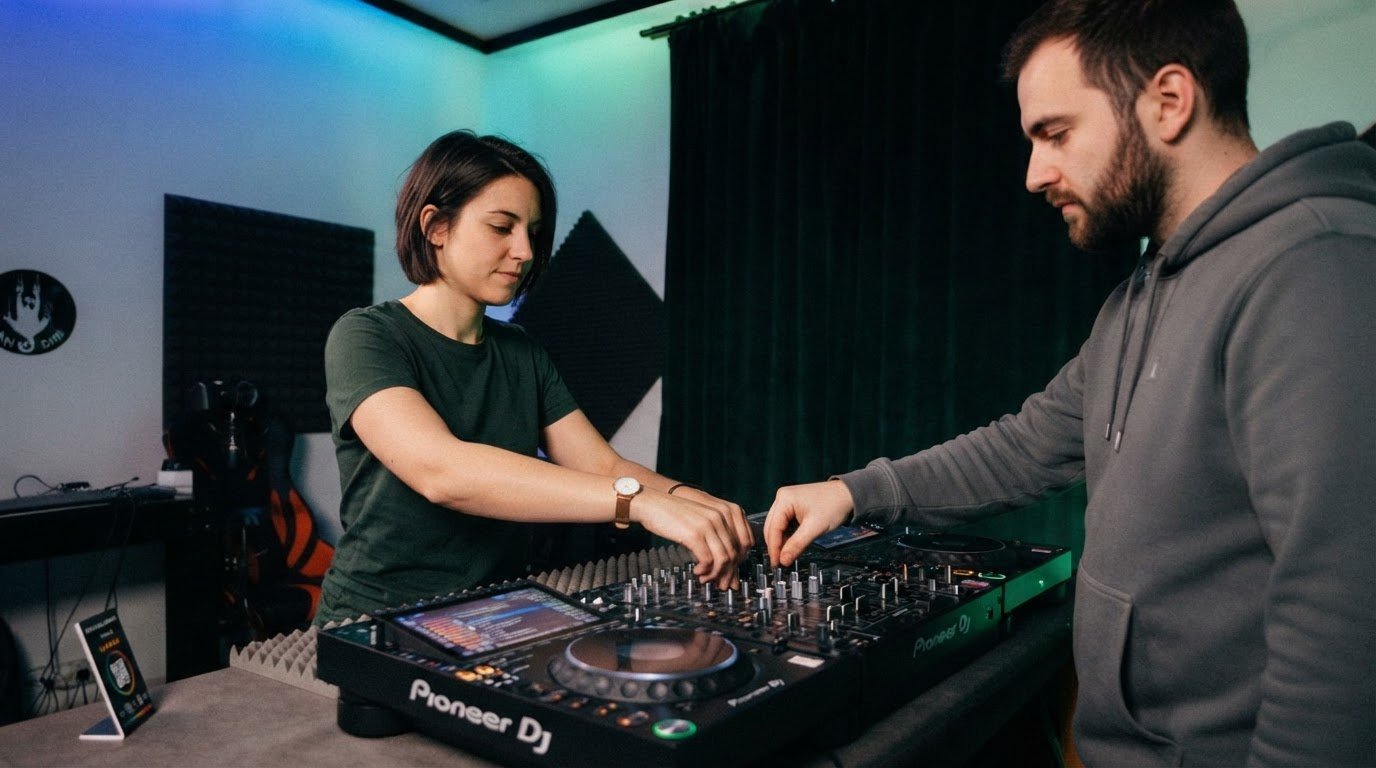

Can you bring friends into the DJ booth? Yes, but ask the other DJ first and limit guests to one or two. Good dj etiquette in the booth starts with making room for the music and respecting everyone sharing the space.
It’s natural to want your crew nearby while you play. But a crowded booth can distract DJs, obstruct equipment, and complicate a handover. A little consideration keeps attention on the set and helps everyone feel welcome.
Bring that same care to every changeover. Share the booth, treat the equipment carefully, pay attention to the previous set’s energy, and hand over cleanly. Communicate respectfully with sound technicians, use the booth monitor appropriately, and report equipment issues promptly. Finish the outgoing track, handle controls gently, and leave the next DJ room to take over. Keep it professional and let your set speak.
Key Takeaways
- Keep the booth comfortable and focused: ask before bringing guests in, and keep drinks, loose clothing, and dangling accessories clear of the gear.
- Make the handover smooth by letting the outgoing DJ finish their track and leaving the controls and booth area tidy.
- Build on the previous set’s energy instead of making an abrupt jump in loudness or tempo.
- Work with the sound technician: use the booth monitor to hear your mix, and report equipment or cable issues promptly.
1. Avoiding loose clothing and dangling accessories near equipment
A clear booth protects the mix and the gear. Keep drinks on a separate surface, away from CDJs, mixers, and cables. Spills can interrupt a set and put equipment at risk. Avoid jewellery that could rattle against the mixer or snag headphone cables. If you wear a hoodie, push up the sleeves and tuck away the drawstrings before touching the controls. Choose a layer that stays comfortable while you play.
Respect the space as well as the equipment. Ask the other DJ before bringing a friend into the booth, and keep guests to one or two people. Don’t touch another DJ’s headphones, laptop, or other belongings without permission. Before your set, check that the faders and knobs work, the laptop stand is functional, and the necessary wires are present and compatible. Gently wipe the booth with antibacterial wipes if available.
Do booth etiquette rules differ between clubs, festivals, and private events? The layout and venue expectations may vary, but ask before touching equipment or inviting guests in any booth. Follow the venue’s instructions and keep the shared area clear.
How should DJs communicate with each other during a set? Keep it brief, clear, and respectful. Agree on the handover, and let the outgoing DJ finish their track before taking control.
When is it appropriate to request a song from a DJ? Ask politely, without interrupting a transition or reaching across the mixer. The DJ may be focused on the mix and can decide whether the request suits the set.
What should DJs do if equipment fails during a set? Tell the venue contact or owner as soon as possible, describe the fault, and don’t force a control or cable. Common booth mistakes include spilling drinks, crowding the space, using another DJ’s gear without permission, and handling controls roughly.
At closing, return the mixer’s knobs and faders to their proper positions, set the stop brake to zero, and remove your trash. Report damage or missing wires before leaving so the next DJ has a clean, workable setup.
2. Handing over cleanly at the end of a slot
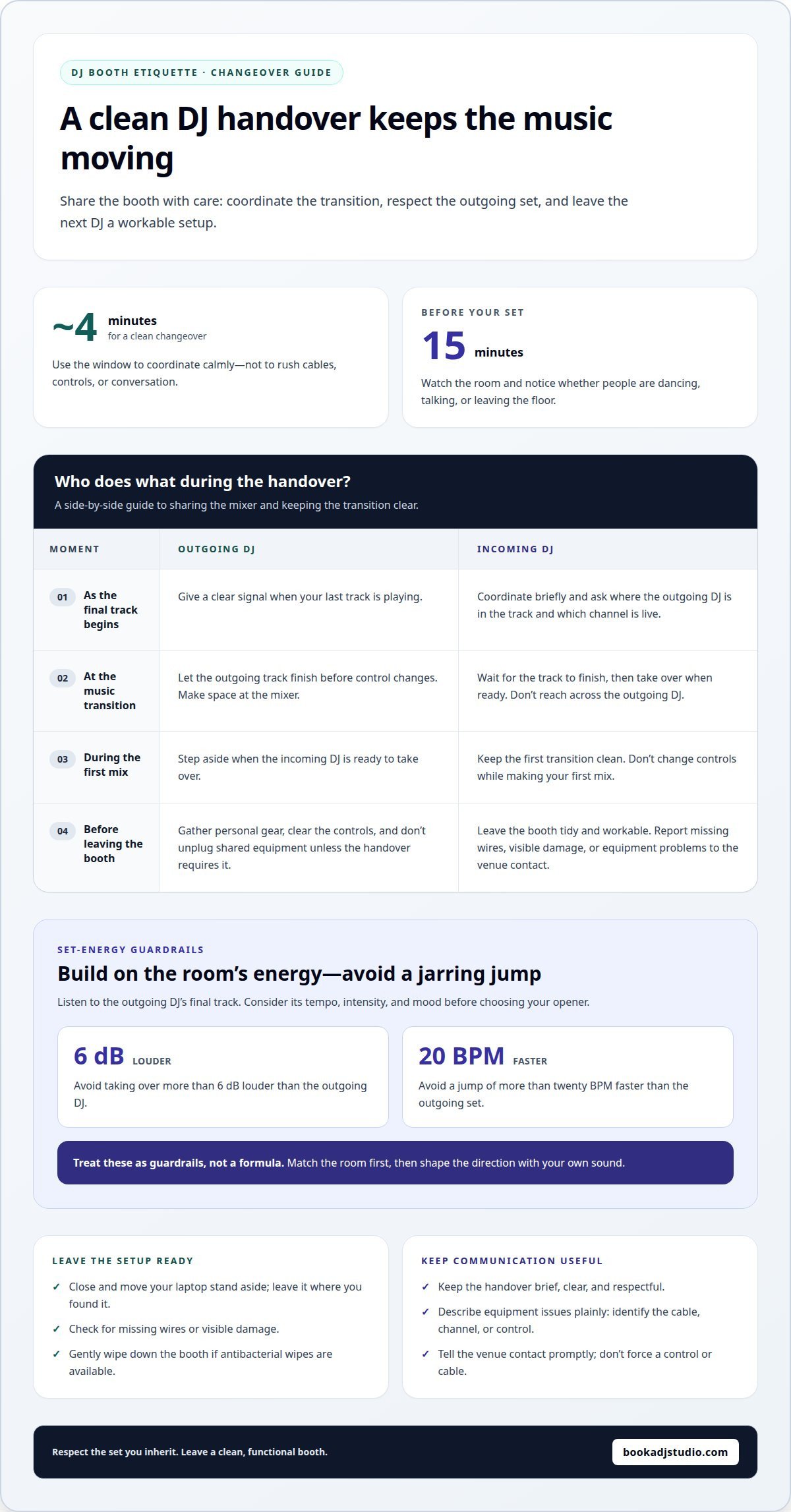
A smooth handover starts before your final track. Be ready for the next DJ to switch over, and give them a clear signal when your last track is playing. Let the outgoing track finish before the incoming DJ takes control. A clean changeover takes about four minutes, so use that window to coordinate rather than rush through cables, controls, or conversation.
Keep the transition simple. Tell the incoming DJ where you are in the track and which channel is live. Make space at the mixer, then step aside when they’re ready to take over. Don’t reach across their hands or change controls during their first mix. Follow the booth’s handover routine, if there is one. Clear, brief communication helps both DJs focus on the music.
Before leaving, close your laptop stand, move it aside, check that it works, and leave it where you found it. Check the booth for missing wires or visible damage. Tell management or the venue contact about any issue before you go, rather than leaving the next DJ to discover it mid-set. If antibacterial wipes are available, gently wipe down the booth area.
Leave the next artist a functional setup, not a puzzle. Keep your personal gear together, clear your space at the controls, and don’t unplug shared equipment unless the handover requires it. If something needs attention, explain what happened plainly: identify the cable, channel, or control and describe the problem. That gives the next DJ and venue team a useful starting point.
Build the handover into your practice routine. A focused run-through lets you rehearse track timing, sharing the mixer, and clearing your gear without the pressure of a live slot. Use hourly DJ studio access to practise those transitions and make your next changeover feel deliberate.
3. Matching the previous set’s energy during changeover
Your first track sets the tone for the handover. Listen to the outgoing DJ’s final track and notice its tempo, intensity, and mood. If the room is moving to a steady groove, an abrupt jump to a high-impact track can feel disconnected. Build on the energy in the room, then shape the direction with your own sound.
Avoid taking over 6 dB louder than the outgoing DJ, or twenty BPM faster. Those jumps can make the change feel jarring rather than exciting. Treat the figures as useful guardrails, not a reason to copy the previous set. Choose a compatible opening track, keep the level controlled, and let a gradual transition create space for a bigger shift.
Read the crowd before you commit. Spend Fifteen minutes watching the room before your set, as the research guidance recommends. Notice whether people are dancing, talking, or leaving the floor. Compare that mood with the outgoing DJ’s selections. A packed floor and a subdued room call for different choices, even if the tracks share a tempo.
Think about musical details, not just BPM. If the previous DJ ends with warm, melodic house, you could open with a track that shares its atmosphere before introducing a sharper groove. If they close with driving techno, preserve some momentum instead of resetting the room. Match the energy first, then develop your own arc.
Prepare a few opening options before your slot. Sort tracks by mood or intensity, then choose one that fits the room. During the handover, make your first transition clean and avoid competing with the outgoing DJ’s final moment. Strong dj etiquette in the booth means respecting the set you inherit while making a confident move toward your own sound.
Treat in-house sound technicians with respect. They help shape the sound you and the crowd hear during a gig.
4. Working respectfully with sound technicians
The in-house sound technician helps shape what the audience hears, so treat them as part of the team. Speak calmly, listen to their instructions, and describe what you’re hearing without demanding a particular fix. For example, “The booth monitor sounds quieter on the left” gives them a clear starting point. A respectful exchange keeps attention on the sound, not booth tension.
Use the booth monitor to hear your mix instead of raising the master output. The master affects the sound sent beyond your headphones, while the monitor helps you judge the mix in the booth. If you can’t hear clearly, tell the technician what you notice. Don’t keep turning up the master to compensate, as that can change the room’s level without fixing the monitoring problem.
During your opening check, report faulty equipment or missing wires to the venue contact or owner as soon as possible. Be specific: identify the affected deck, mixer channel, or cable, and describe what happens when you use it. If a connection seems loose, don’t repeatedly force it into place. Clear details help the technician investigate while you protect the rest of the setup.
If a problem appears during your set, stay composed. Keep the music going if the setup allows, then alert the technician or venue contact with a concise description. For example, say that one deck has stopped responding instead of calling the whole system broken. Don’t adjust unfamiliar sound-system controls or unplug shared cables without coordination. A quick, accurate report is more useful than a rushed guess.
Build good monitoring habits in practice. Notice how the booth monitor sounds at different points in your mix, and rehearse explaining a technical issue clearly. Practise your DJ monitoring and booth communication before your next live set, so you can collaborate with the sound technician while keeping your focus on the music.
Book a DJ Studio
Book a DJ Studio gives you space to practise booth etiquette, changeovers, and set flow without the pressure of a live handover. Use Hourly Studio Access or Session Packages to sharpen how you share the controls, prepare your mix, and transition between tracks. Add Audio Recording or 4K Video Recording to review your performance and spot details to refine, from your timing to how smoothly you manage the booth.
Turn to the studio when you want focused practice, a recorded set, or a clearer view of your performance before your next gig. Ready to build your next set? Contact Book a DJ Studio.
Make your next changeover your strongest yet
Turn good intentions into a repeatable booth routine. Before your next set, decide how you’ll prepare, communicate, and adapt if the room or setup changes. Afterward, note one thing that went well and one detail you’d handle differently. A brief review can help build your confidence from gig to gig.
Keep your sound distinct while making space for the DJs and technicians around you. That balance is at the heart of dj etiquette in the booth: bring your own creative drive while helping the whole night run smoothly.
Want to refine your approach before stepping into another live changeover? Plan a practice session with Book a DJ Studio and give your next set room to evolve. Every thoughtful handover is another chance to build trust, sharpen your craft, and leave the booth ready for what comes next.
Frequently Asked Questions
Can you bring friends into the DJ booth?
Yes, with the other DJ’s permission and enough room to keep the performance area clear. If guests would crowd the controls or interrupt a transition, ask them to wait outside.
Can you wear a hoodie while DJing?
Yes. Keep the sleeves and drawstrings away from the controls, and choose a layer that stays comfortable as the booth warms up.
Does behaviour really affect whether a DJ gets rebooked?
It can. Organisers notice preparation, clear communication, and how you treat staff and shared equipment, not only your track selection.
How should DJs handle a changeover?
Coordinate with the outgoing DJ, wait for the agreed handover moment, and don’t rush your first mix. Tell the venue team clearly if a problem arises.
Rule 2: What should you avoid wearing behind the decks?
Avoid dangling jewellery, loose sleeves, and accessories that could catch on cables or knock controls. Choose clothing that lets you move freely.
Rule 5: How dressed up should you be compared to the crowd?
Dress to suit the venue while staying comfortable and true to your style. Recent guest DJ photos on the venue’s social media can offer a useful guide.