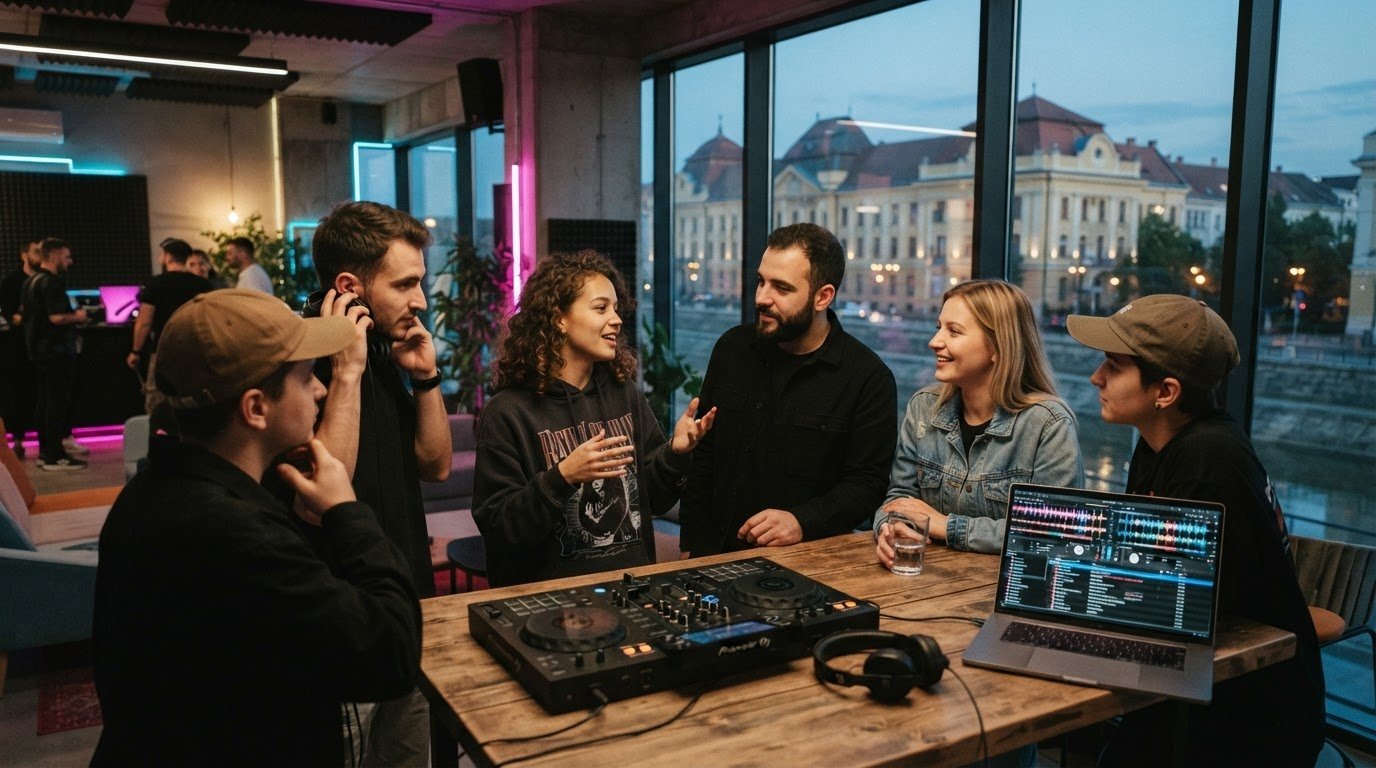

Your next meaningful DJ connection in Romania may start with a conversation, not a pitch. If cold messages feel awkward or you’re unsure where to meet the right people, show up with curiosity and a clear sense of your sound. That’s the foundation of how to network in the music industry in romania.
Build genuine connections by finding relevant communities, starting conversations naturally, and following up with care. This guide offers practical steps for turning introductions into opportunities to share work and explore collaborations.
Start with the local scene in Timișoara, then widen your reach across Romania as it makes sense for your goals. Keep creating, stay open, and let your music give people a reason to continue the conversation.
Key Takeaways
- Learn how to network in the music industry in romania by building reciprocal relationships, not just collecting contacts.
- Find relevant places to meet music professionals in Timișoara, Bucharest, and Cluj-Napoca.
- Start conversations around a shared point of interest, then follow up with a brief, personal message.
- Use a focused recorded set or profile to give potential collaborators a clear sense of your sound.
- Build a repeatable networking routine that keeps conversations moving without treating people like leads.
Why networking matters in Romania’s music industry, and what it really means
Music-industry networking means building professional relationships through shared interests, reliability, and genuine contribution. It isn’t a numbers game. A contact becomes a connection when you listen, follow through, and look for ways to support each other’s creative work.
That matters when you’re learning how to network in the music industry in romania. Useful relationships can grow locally, elsewhere in the country, or online. Romania’s scene includes traditional folk, pop, rock, and electronic sounds; explore the Music of Romania for wider cultural context. You don’t have to be in one particular city to begin making connections.
For a glimpse of a Romanian music-industry gathering, watch the MMB after movie:
Who might you want to meet in the Romanian music industry?
Start with people connected to your sound and your next practical step: DJs whose sets you respect, promoters and venue teams who shape nights in your genre, event organizers, label representatives, and other artists. A thoughtful shortlist is more useful than approaching everyone. Choose a few people or communities whose work genuinely interests you, then learn what they do before introducing yourself.
Keep your goals specific. If you want to play more, learn how local nights are put together and connect with people involved in them. If you’re refining your style, seek out artists who share your influences or audience. This gives you a real reason to start a conversation, whether you meet in Timișoara, Bucharest, Cluj-Napoca, or online.
What can you offer before asking for an opportunity?
Bring something genuine to the exchange. Give specific, thoughtful feedback on a set, support another artist’s release, or contribute regularly to a community conversation. You don’t need to promise favours or make each interaction transactional. Reciprocity means showing up with respect and contributing where you can.
Be clear about your own direction, too. Describe the sound you’re exploring and what you’re working on, such as shaping a tighter club set or recording a mix that captures your style. Reliability builds trust: reply when you say you will, arrive prepared, and follow through on small commitments. Connections take time, and consistent creative effort gives them room to grow.
Where to Meet Music Pros in Romania: Timișoara to Bucharest
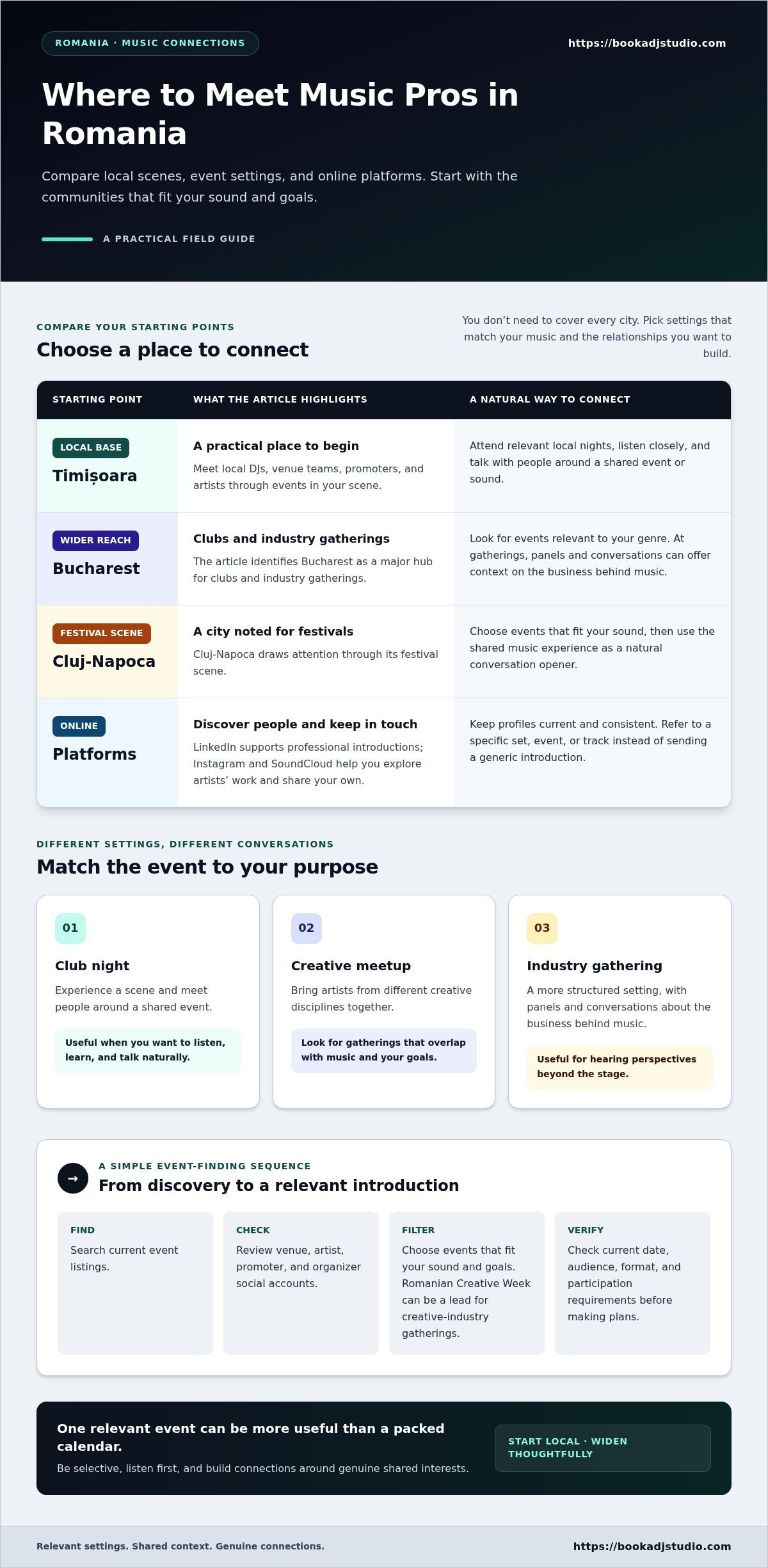
Start where you are. Timișoara is a practical base for meeting local DJs, venue teams, promoters, and artists through events in your scene. From there, widen your reach: Bucharest is a major hub for clubs and industry gatherings, while Cluj-Napoca draws attention through its festival scene. You don’t need to cover every city. Choose settings that fit your sound and the relationships you want to build.
Different settings offer different ways to connect. A club night lets you experience a scene and meet people around a shared event. Creative meetups can bring artists from different disciplines together. Industry gatherings are more structured, with panels and conversations about the business behind music. For a broader sense of the country’s potential, read Music Business Worldwide’s overview of Romania as an emerging music market.
How do you find events and communities that fit your sound?
Search current event listings, then check the social accounts of venues, artists, promoters, and organizers whose work overlaps with your genre. Romanian Creative Week can be a lead for discovering creative-industry gatherings. Review its current programme and choose events relevant to music and your goals. Before making plans, check current details such as the date, audience, format, and participation requirements.
Be selective. One relevant night where you can listen, learn, and talk naturally may be more useful than a full calendar of events that don’t fit. A focused approach also makes it easier to remember who you met and what you connected over.
How can online networking support local connections?
Use online platforms to discover people and keep conversations moving. LinkedIn can support professional introductions; Instagram and SoundCloud can help you explore artists’ work and share your own. Keep your profiles current and consistent, with a clear description of your sound and a focused sample of your work. When you reach out, refer to a specific set, event, or track rather than sending a generic introduction.
A practical approach to how to network in the music industry in romania combines local discovery with online follow-through. If you’re in Timișoara, focused practice in a DJ studio in Timișoara can help you prepare a set that represents your sound before sharing it with new contacts.
How to start conversations and follow up without sounding pushy
Make every first message specific, respectful, and easy to answer. That works at a club, an industry gathering, or in a direct message. You’re opening a conversation, not asking someone to decide your future on the spot.
In person, start with shared context: a set you’ve both heard, an event you’re attending, or a project the person has discussed. Introduce yourself briefly, ask one relevant question, then listen. For example: “I’m a DJ from Timișoara exploring deeper house sets. I liked how you built the energy in your closing set. What do you look for when you’re putting together a night?” Keep it natural. If the person is busy, thank them and give them space.
What should a first message to a Romanian DJ or promoter include?
Refer to something specific they’ve shared, then offer a clear snapshot of your own direction and one modest ask. For example: “Hi, I caught your recent event announcement and liked the mix of local and international selectors. I’m developing a melodic house set in Timișoara. Is there a local event page or community you recommend following?” This gives them an easy way to reply without turning the message into a booking request.
Skip mass messages, inflated claims, and long lists of links. Don’t open by asking for a slot, a favour, or an introduction. If you share a mix, make sure it relates to the conversation and briefly explain why you’re sending it.
How do you turn a first meeting into a lasting connection?
Follow up while the conversation is still easy to recall. Send a short thank-you and mention one detail you discussed: “Good meeting you at the event. I appreciated your recommendation about exploring local breaks nights. Here’s the mix I mentioned.” Include a link or update only when it’s relevant and useful.
If you don’t hear back, don’t read too much into the silence. People may be busy, or the message may have slipped past them. You can send one polite follow-up after a reasonable interval, adding context rather than simply asking for a reply. If there’s still no response, leave it there. Keep engaging naturally with their work and reconnect only when you have a genuine reason.
The practical core of how to network in the music industry in romania is simple: make the first exchange personal, follow through on what you say, and let trust grow at its own pace. One thoughtful conversation beats a stream of generic DMs.
How to build credibility and turn music-industry contacts into collaborations
A clear portfolio helps a new contact quickly understand your sound, style, and direction. Keep it focused: one representative set, a concise artist profile, and a short note about the kind of work you’re exploring. A carefully chosen link is easier to act on than a long catalogue that leaves people guessing where to start.
Choose a set that fits the conversation. If you’ve met a promoter of underground electronic nights, share a mix that reflects that sound, not an unrelated experiment. Add brief context, such as the set’s style and what you wanted to explore, and make sure the link opens easily. For a promotional recording, listen back for consistent levels, clean transitions, and a clear beginning and ending before sharing it. Broader career advice can also help you map out your next steps as a DJ in Romania.
What should a DJ share when someone asks to hear their work?
Make listening simple. Send one relevant recording and a short introduction, then let the work speak. A recorded set can help potential collaborators hear your track selection, transitions, pacing, and overall identity. If you’re still refining the mix, deliberate practice in a professional DJ booth can help you prepare a version that represents you confidently.
Make your creative direction easy to understand. Share work that supports the conversation, not every link you’ve ever posted. A concise introduction can tell the listener what style or idea to listen for, without trying to explain every choice in the mix.
How can you propose a collaboration that feels manageable?
Start with a small, defined idea that gives both people room to test their creative chemistry. Suggest a shared online set, an exchange of mixes with feedback, or a short livestream built around a genre or theme you both enjoy. Before you begin, agree on the format, each person’s role, timing, and how you’ll share the finished result.
Keep the first project achievable. Clear expectations reduce friction and show that you respect the other person’s time. Audio or 4K video recording can capture a prepared performance; a livestreaming setup can support a live online share. These are ways to present a collaboration to an audience, not a substitute for planning together.
If you’re preparing a set to share with potential collaborators, focused practice and a recording can help you present it clearly. Book a DJ Studio offers studio access in Timișoara, with audio and 4K video recording as optional add-ons.
Your practical networking plan: show up, follow through, and keep creating
Turn networking into a repeatable rhythm, not a one-off push. Choose one relevant opportunity, prepare a brief introduction, take part with curiosity, then follow up with anyone you connected with. Focus on contributing and learning, not leaving with a booking or a stack of contacts.
A simple private note on your phone can help you remember names, what you discussed, and any next step you agreed on. Treat it as a memory aid, not a sales tracker. If someone shared a project or recommended a track, note that detail so your next message connects to a real conversation.
What can you do this week to grow your music network?
Choose one local or online community that fits your sound. Before joining a conversation or attending an event, prepare a short introduction and one relevant set or artist-profile link. After a promising exchange, send a brief follow-up that refers to what you discussed. Then give the other person room to respond. Consistent, thoughtful participation is more valuable than trying to meet everyone at once.
How can focused practice help you network with confidence?
Rehearse transitions and shape a coherent set before sharing your work or meeting potential collaborators. Knowing what you want your set to communicate makes it easier to introduce your sound clearly, whether you’re talking in person or sending a mix online. Practice supports confidence, but it can’t guarantee bookings or collaborations. Those depend on fit, timing, and continued effort.
For DJs in Timișoara, Book a DJ Studio offers hourly practice access and multi-session packages at its professional DJ studio. Optional audio recording, 4K video recording, and a livestreaming setup can help you capture and share a performance. Choose the setup that suits your goal, whether you’re sharpening a set privately or preparing content to share. Networking still starts with genuine interaction and a willingness to keep creating.
A focused practice session can help you prepare a promotional set, but it isn’t a prerequisite for making connections. Use it when it fits your goals and gives you a useful next step.
Keep building your sound and your connections
Strong music-industry relationships grow through consistent, genuine interaction. Focus on people and communities that fit your sound, start conversations with a specific reason, and follow up with care. A concise mix or artist profile can help others understand your direction, while a small creative exchange gives you a way to explore collaboration without rushing into a major commitment.
That’s the heart of how to network in the music industry in romania: show up, contribute, and keep creating. There’s no need to force a breakthrough. Let trust build through shared interests and reliable follow-through.
If a focused practice session would help you prepare a promotional set, Book a DJ Studio offers hourly access and multi-session packages at its professional DJ studio in Timișoara. Optional audio recording, 4K video recording, and a livestreaming setup can help you capture and share your performance. Explore DJ studio booking in Timișoara to plan your next practice or recording session.
Frequently Asked Questions
How do I start networking in Romania’s music industry?
Start with a clear goal, such as meeting local DJs or finding collaborators who share your genre. Look for relevant events and online communities in Timișoara, Bucharest, or Cluj-Napoca. Introduce yourself with a genuine reference to someone’s work, then follow up briefly after a useful conversation. A practical approach to how to network in the music industry in Romania is to contribute consistently rather than asking for opportunities right away.
Where can DJs meet other music professionals in Romania?
DJs can meet music professionals at genre-relevant club nights, music events, creative gatherings, and in online communities. In Timișoara, follow local venues, artists, and event organizers to discover activity that fits your sound. Online platforms can help you connect with people elsewhere in Romania, too. Choose spaces where you can participate in the music and conversation, not just exchange contact information.
How should I message a music promoter or DJ for the first time?
Keep your first message short, personal, and easy to answer. Mention a specific set, event, or project of theirs that genuinely caught your attention, then introduce yourself and your current musical focus in one clear sentence. Ask one thoughtful question or make one relevant, modest request. Avoid sending the same pitch to multiple people or asking immediately for a booking. A personal message gives the conversation a natural place to begin.
Do I need a large following to network in the music industry?
No, a large following isn’t required to start building professional relationships. Clear communication, reliability, and a focused sense of your sound can help people understand what you bring to a conversation. Share a representative set or profile when it adds useful context, but don’t treat every introduction as a shortcut to career growth. Show genuine interest in other people’s work, listen well, and look for ways to contribute to the community around you.
How often should I follow up after meeting someone at a music event?
Send one brief follow-up while the conversation is still easy to remember. Thank the person and refer to a detail you discussed, such as an event or track they mentioned. Share a link only if it’s relevant to the conversation. If they don’t respond, avoid sending repeated messages. Respect their space, engage naturally with their work, and keep building connections with other people in the music community.
What should I prepare before networking with DJs and music professionals?
Prepare a short introduction that explains your sound and what you’re working toward, plus one representative set or profile link. Think of a relevant question you can ask or a small collaboration idea to discuss. You don’t need a polished pitch for every situation. If you’re in Timișoara, focused practice at a DJ studio can help you refine transitions and feel more confident sharing a promotional set or describing your direction.