


What makes a set sound like yours? Creating a unique dj identity starts with the choices you make behind the decks, from the tracks you select to the way you build energy. The goal is to turn your instincts into a sound listeners can recognise.
If your sets or visuals feel too similar to other DJs, you might think you need a polished brand before you can stand out. You don’t. Your direction can emerge as you play, listen back, and notice which choices feel natural to you.
This guide will help you connect your musical taste with your name and visual style, then use recorded practice to hear what stands out. Start curious, trust your ear, and shape your identity one mix at a time.
Key Takeaways
- Build your DJ identity from the sound, energy, and presentation that genuinely reflect your point of view, not a character you feel pressured to perform.
- Test your signature sound with recorded mixes. Change one element at a time so you can hear which choices feel most recognisable.
- Make your DJ name, bio, visuals, and track choices express a clear, consistent story.
- Use audience feedback to spot what connects, then refine a choice without letting trends decide who you are.
- Turn creating a unique dj identity into a practical session plan: shape a set, record it, listen back, and choose one detail to develop next.
What Makes a DJ Identity Feel Distinctive and Authentic?
A DJ identity is the recognisable combination of your sound, musical choices, energy, and presentation. It’s more than a stage name or logo. Your DJ identity is the point of view listeners can recognise in what you play, how you shape a set, and how you present yourself.
That point of view gives listeners a sense of the experience you’re creating, whether it’s a slow-building journey, sharp changes in energy, or unexpected turns between styles. You don’t need to invent a character to stand out. Begin with what feels true to you, then make those choices clear and intentional. That’s the foundation of creating a unique dj identity.
For a quick prompt on name and identity, watch this short video:
Start with your influences, instincts, and musical purpose
Look at what you choose when nobody is asking you to fit a brief or follow a trend. Note the artists and tracks you return to, then look beyond genre labels. What catches your ear: rolling percussion, vocal hooks, deep bass, loose grooves, or dramatic builds? Pay attention to how you like to move between tracks, too. Do you prefer long blends, quick cuts, or a pause before the next drop?
Next, decide what you want the room to feel. Choose a few words, such as warm, restless, playful, or hypnotic. They aren’t rules for every set. Think of them as a compass when you’re choosing tracks or shaping an energy arc. For a simple exercise, choose one mood, select tracks that support it, and write down why each one belongs. Those reasons may reveal a personal thread that a genre label alone can’t describe.
Separate authentic identity from imitation
Influences are fuel, not a blueprint. Work out what moves you in another DJ’s set, then translate that spark through your own taste. You might admire a DJ’s pacing, for example, while building your own set from different tracks, transitions, and energy shifts.
Before adding a track, visual reference, or trend-led detail, ask yourself: “Would I choose this if nobody saw it?” If the answer is no, it may be there to signal that you’re current rather than express what you love. Experiment freely, then keep the parts that feel natural and leave the rest behind.
Your identity isn’t a fixed package. As you listen more widely and develop your mixing skills, your taste may change. Consistency comes from an honest point of view, not from repeating the same sound forever. Keep exploring while giving listeners a clear thread to follow.
How to Find Your Signature Sound Through Deliberate Mix Experiments
Your signature sound doesn’t have to appear in one sitting. Build sets, listen back, and notice which choices you want to make again. A simple, repeatable experiment can turn vague instincts into useful observations while leaving room for unexpected combinations.
Repeated musical choices can make a set recognisable, even when the tracks change. Try using a few anchors, such as a particular energy curve, groove, or transition style, then let individual tracks bring the surprises.
Try this loop:
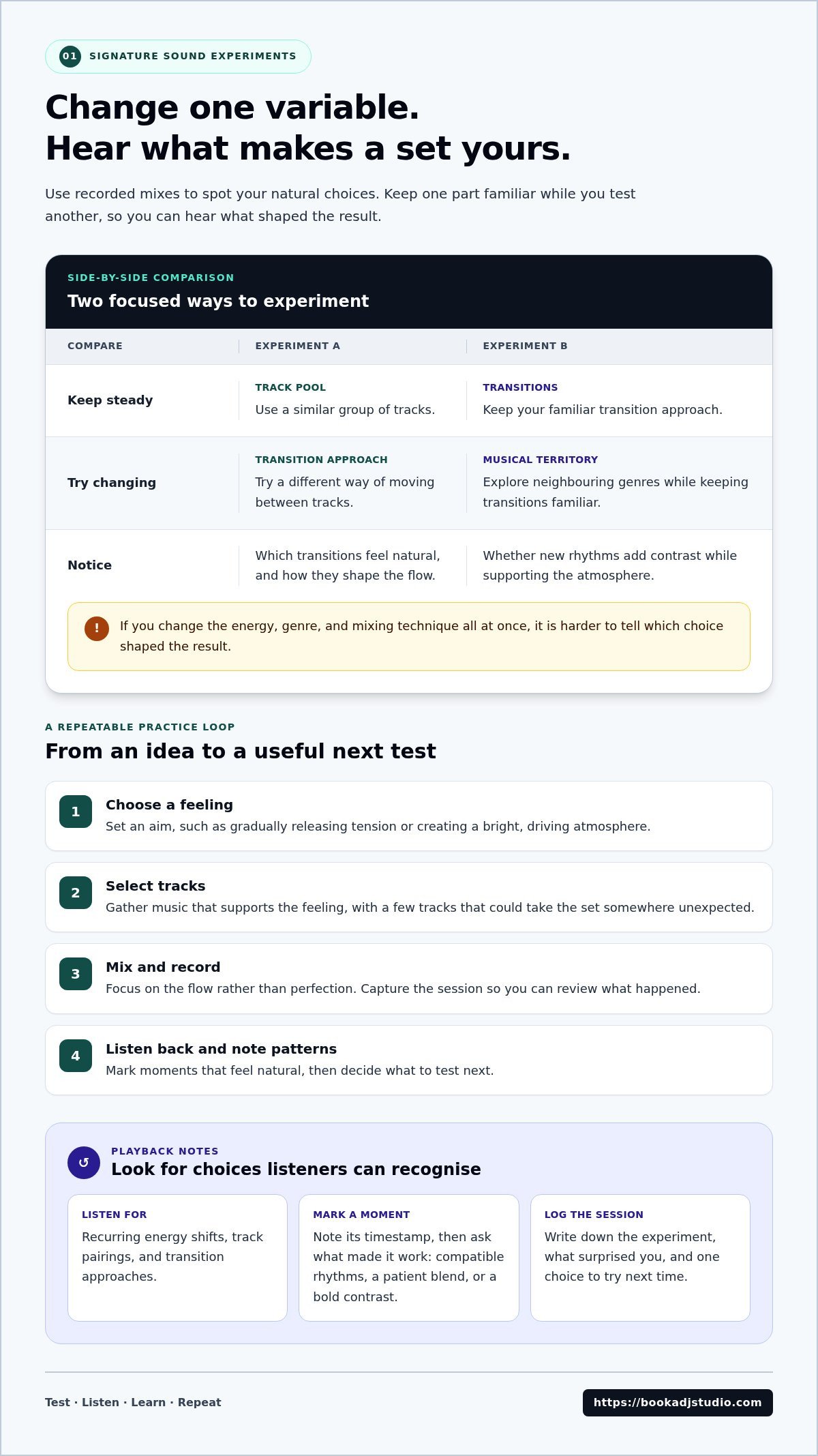
- Choose a feeling. Set a clear aim, such as gradually releasing tension or creating a bright, driving atmosphere.
- Select tracks. Gather music that supports the feeling, including a few tracks that could take the set somewhere unexpected.
- Mix and record. Focus on the flow rather than perfection. Capture the session so you can review what happened.
- Listen back and note patterns. Mark the moments that feel natural, then decide what to test next.
Change one variable per experiment. Keep a similar track pool while trying a different transition approach, or keep your transitions familiar while exploring neighbouring genres. If you change the energy, genre, and mixing technique all at once, it’s harder to tell which choice shaped the result. Deliberate practice gives creating a unique dj identity a practical rhythm: test, listen, learn, and repeat.
Build a musical palette without boxing yourself in
Choose a few sounds or moods you enjoy returning to, not strict rules for every set. You might be drawn to crisp percussion, spacious synths, and a gradual rise in intensity. Explore neighbouring genres when they support that atmosphere. A new rhythm can add contrast without breaking the mood. Genre labels can help describe a set, but they don’t have to limit your next experiment.
A University of Connecticut paper offers a broader perspective on the construction of musical identities. In your own mix practice, treat identity as something shaped by choices over time, not a formula you need to solve before you play.
Review recordings for choices listeners can recognise
On playback, listen for recurring energy shifts, track pairings, and transition approaches. Note the timestamp of a moment that feels especially natural, then ask what made it work: compatible rhythms, a patient blend, or a bold contrast? Flag habits that need practice, too. A repeated transition might be a signature, or it might be a technique you haven’t yet pushed beyond your comfort zone.
Keep a short session log with the experiment, what surprised you, and one choice to try next time. A focused practice or recording session at a ready-to-use DJ studio in Timișoara gives you space to hear how those choices connect across a complete set. Review the mix with curiosity. You’re not grading your taste; you’re finding patterns worth developing.
How to Align Your DJ Name, Story, and Visual Identity
Your name, bio, visuals, and sets all introduce the same artist. They don’t need to look identical, but they should point in the same direction. If your mixes feel warm and playful, a stark, mysterious presentation may send a different signal. Aim for alignment: each public-facing choice should help listeners recognise the atmosphere and point of view they hear in your sets.
Keep it clear before making it complex. You don’t need an expensive logo, a full visual package, or an elaborate backstory to start. A memorable name, a concise bio, and a consistent image style can already make your presence feel intentional.
Choose a DJ name and story that are easy to remember
Brainstorm names that feel natural to say aloud and suit the atmosphere you want to create. Say each option in a sentence, then imagine hearing it announced before a set. Is it easy to pronounce and spell? Does it feel like you, or does it rely on forced mystery? Search the name online using a few common spellings and on the platforms where you plan to share mixes. Make it easy for listeners to find the right artist.
Give your bio the same focus. In a few sentences, connect what draws you to music with the experience you want listeners to have. For example: “I’m drawn to rolling percussion and late-night synths, and I build sets that move from patient grooves into brighter, driving energy.” Make the description specific to your taste. Skip inflated career claims. A straightforward story sounds more convincing than borrowed hype.
Make visuals support the music rather than compete with it
Choose a visual mood that fits the sound: warm tones and candid performance shots for an open, soulful feel, or clean shapes and darker images for a more restrained atmosphere. Start with a simple colour direction and image style, then apply them to your profile picture, banners, and mix artwork. Consistency comes from repeating a few clear choices, not filling every space with design.
Use photos or recorded clips that reflect the real energy of your sets. If the music builds gradually, a frantic visual edit may promise something different. Keep the core look recognisable across platforms while adapting crops, captions, and formats to each one. Your presentation can flex without losing its thread.
Before publishing, run a quick alignment check:
- Does the name feel easy to say, spell, and remember?
- Does the bio connect your musical interests to a listener experience?
- Do the visuals match the energy and mood of your mixes?
If one element feels disconnected, adjust that piece rather than rebuilding everything. Let the music lead, and make each detail reinforce the same story.
How to Test and Refine Your DJ Identity Without Chasing Trends
Your identity gets clearer when you test it across a complete set, not just a short clip or a single track choice. Use a simple loop: make a set, listen back, gather feedback, and adjust one choice. Treat each pass as a fresh read on your direction, not a final verdict on your talent.
Record a practice set and listen from the opening through to the close. Does the energy develop as you intended? Do your track choices feel connected, even when the mood shifts? A full recording can show whether your identity carries through the journey or appears only in isolated moments. Note your overall impression, then choose one element to refine in the next mix.
Consistency helps when it gives listeners a thread to follow. It becomes limiting when you repeat the same transitions, energy curve, or track type simply because they worked before. Keep the recognisable core, but make room for a new direction. That balance helps you create a unique dj identity that can grow without losing its shape.
Use feedback without handing over your creative direction
Ask a few trusted listeners focused questions instead of “Did you like it?” Try: “What mood stayed with you?”, “Which moment stood out?”, or “Where did the energy shift?” Specific answers can show you what is reaching people. Compare their impressions with the experience you meant to create. If you aimed for a slow build and they describe a sudden jump, that’s useful information about how the set lands.
Audience response is a signal, not a vote on whether your taste is authentic. Look for observations that clarify your intent, then decide for yourself what to keep. If listeners consistently remember a particular kind of transition, consider whether it feels natural to you and supports the set. Keep choices that are honest to your taste and clear in their effect.
Let your identity evolve while keeping a recognisable thread
Return to older mixes now and then. Notice which interests have changed and which still feel like home. Perhaps your track selection has widened, but you still favour a patient build or a certain rhythmic feel. That recurring thread can keep your sound familiar while new influences move it forward.
Introduce unfamiliar sounds gradually enough to hear their impact. Try a new style in one section of a set, then listen for whether it adds tension, release, or a welcome contrast. You don’t need to redesign your name, bio, or profile after every experiment. Let the music develop first, then update your wider presentation when a change feels like a lasting part of your direction.
When you’re ready to hear your ideas in a complete set, a DJ studio practice or recording session in Timișoara gives your experiment room to take shape.
Bring Your DJ Identity to Life in a Practice or Recording Session
Turn the ideas you’ve been shaping into a complete set. A focused session lets you hear whether your musical choices, energy, and transitions work together from the opening track to the close. Treat it as a creative test, not a performance you have to get perfect. Listen for what feels true and what you want to develop next.
Prepare a set that expresses the identity you have been shaping
Before choosing tracks, write down the mood or journey you want to create. You might build from deep, restrained grooves into a brighter finish. Pick music that supports that arc, then mark a few transitions where your taste can come through, such as a patient blend or a sudden shift in energy. Leave room to react in the moment. A plan gives your set direction without scripting every move.
Book a DJ Studio in Timișoara provides a ready-to-use booth for practice or recording. The setup includes 2 Pioneer CDJ-3000X players, 1 Pioneer DJM-V10 mixer, a Yamaha DXS15 MKII subwoofer, and 2 Yamaha DXR12 MKII speakers. A wired recorder is provided. Bring your own headphones and music. Prepare your USB stick in advance: scan your tracks in Rekordbox before exporting them, and use a stick no larger than 32 GB. You can also bring music on an HDD.
Bookings are made online through the website form, where you select an available day and time. Before your session, note what you want to test, such as whether a particular transition supports the mood or whether the energy holds across the whole mix. During playback, focus on performing rather than judging every choice. Listening to the full recording afterward gives you a clearer picture.
Turn a recorded mix into your next round of creative feedback
The studio’s wired recorder captures your mix so you can revisit its pacing, transitions, and recurring musical choices. For video, 3 Sony ZV-E10 cameras record in 4K from three angles. The studio also has a complete setup for livestreaming sets to social media. The DJ studio gallery shows the space and its visual setup.
After recording, the mix is uploaded and emailed to the address supplied on your booking schedule a few days later. Plan your review around that timing rather than expecting an immediate download. When you listen, write down the moments that feel distinctly yours and one area to explore in your next session. That review loop turns creating a unique dj identity from an abstract goal into a practice you can keep building.
Choose a mood, prepare your tracks, and give your next set room to breathe. If you’d like to practice or record in the Timișoara studio, book a studio session online.
Make Your Next Set a Step Forward
Your DJ identity doesn’t need to be fully mapped before you put it into practice. Let it take shape through the sets you build, the choices you repeat, and the moments that surprise you. Each recording gives you another chance to hear what feels unmistakably yours and decide what to explore next. That’s the momentum behind creating a unique dj identity: staying curious while trusting your own ear.
Use a practice or recording session to test your ideas, then listen back with fresh ears. Notice what connects, what feels forced, and which direction you’re ready to push further.
Book an online DJ studio session in Timișoara and give your next mix room to grow. Your sound is yours to shape. Keep experimenting, stay true to your instincts, and let every set move you forward.
Frequently Asked Questions
Do I need a logo to create a unique DJ identity?
No. A logo can help people recognise your public profile, but it doesn’t define your sound or the experience you create. Start with a clear artist name, a profile image that feels like you, and a short description that matches your mixes. Check how these elements look together on a phone screen and in a mix listing. Keep the design simple while your direction takes shape.
Can my DJ identity include more than one genre?
Yes. You can play across genres and still create a coherent experience. Think about what helps the styles connect, such as a shared groove, a similar vocal feel, or a bridge track that eases listeners into a new rhythm. Try those connections in a mix rather than relying on a genre label to explain everything. Describe your sound in a way that leaves room for exploration.
How do I know whether my DJ name is memorable?
Check whether people can pronounce it, spell it, and recall it after hearing it once. Say the name aloud in a quick introduction, then ask a few people to write it down from memory later. Search the name online using likely spellings to see whether it’s easy to distinguish. A good name should feel natural beside your music, not carry the whole job of making you stand out.
Should I change my DJ identity if my musical style evolves?
Not automatically. Before changing your public identity, compare a recent mix with an older one and note what has shifted. Your track selection may be broader now, while your pacing or approach to building energy still feels familiar. Try the new direction in several sets before changing your wider presentation. That gives you time to tell a lasting creative shift from a one-off experiment.
How can I describe my DJ sound in a short bio?
Use a simple structure: name the styles or moods you play, describe the listener experience you aim for, and add one detail that reflects your perspective. For example, you might mention how you use vocal tracks to bring lift into a late-night set. Keep the wording accurate and avoid claims you can’t support. Read it beside a recent mix to check that the description matches what listeners hear.
Can recording a practice set help me develop my DJ identity?
Yes. Recording can make creating a unique dj identity easier to assess because you can listen without the pressure of performing. Compare the opening and closing sections: does the set travel somewhere, and do your choices feel connected along the way? Note a transition or track pairing you’d keep, plus one moment you’d approach differently. Treat the mix as a working snapshot, not a final judgement.