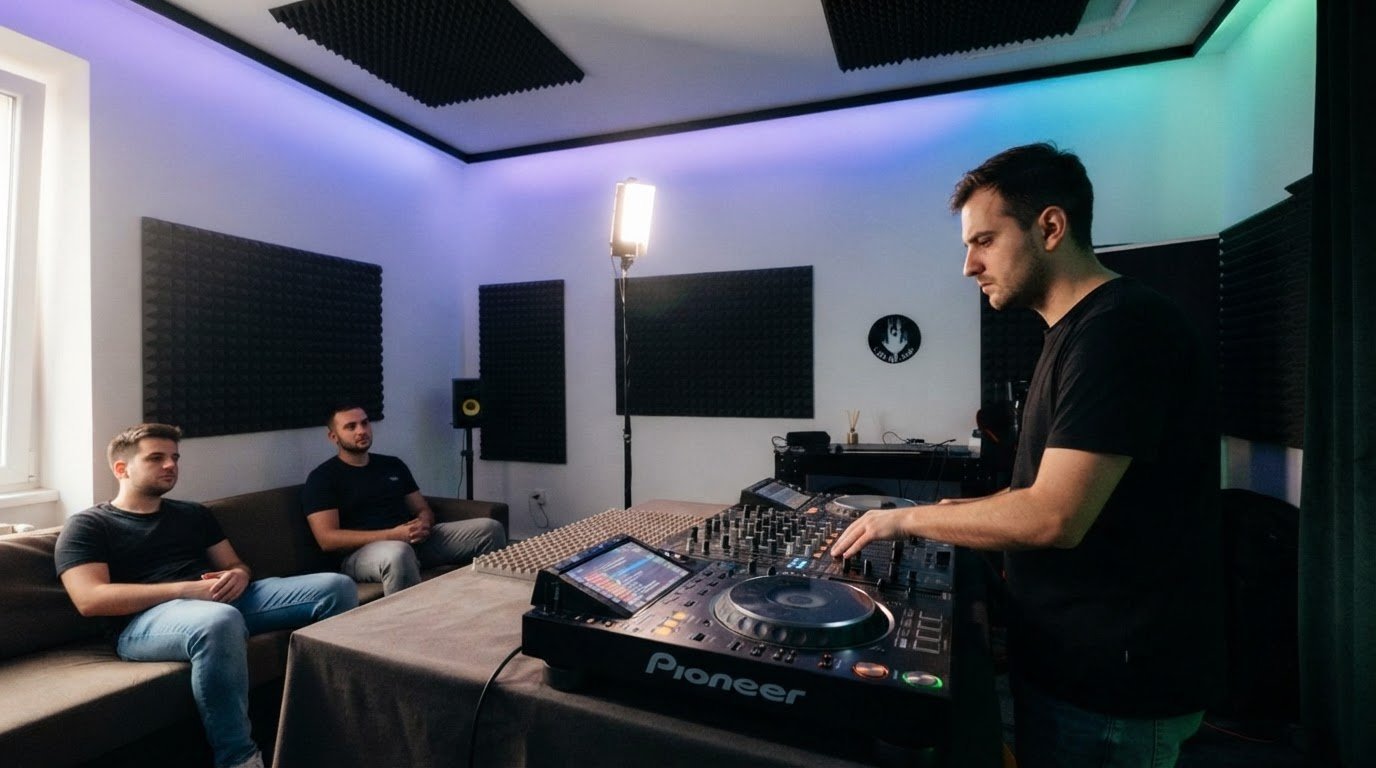

A dancefloor can change its mind before the next track ends. Requests matter, but they’re only one signal. Reading the crowd for DJs means noticing how people move, whether they stay, and how they respond when the beat shifts. The best response isn’t always to follow the loudest voice. Read the room and choose your next move with intent.
Build that instinct without losing your sound. Use four practical approaches to balance requests with your style, match tracks to audience reactions, spot engagement, and adapt when the energy changes. Notice small cues, from tapping feet and relaxed smiles to raised hands, singing, or people drifting away. Then use them to shape your set, test unfamiliar tracks, and guide the dancefloor through new moods with confidence.
Key Takeaways
- Weigh requests against the room’s mood so you can stay true to your sound while keeping the set connected.
- Use audience reactions to guide your next track, and introduce less familiar sounds with intention.
- Look beyond the dancefloor for signs of engagement, then adjust your selections and energy as the room shifts.
- Read the response to each transition and build momentum without forcing a change that isn’t landing.
1. Balancing crowd requests with personal style
Treat a request as information, not an instruction to abandon your set. Check whether the song fits the current tempo, mood, and audience response. If someone asks for a familiar pop track during a house set, try a compatible remix. That acknowledges the request while keeping your sound in the mix. Requests can inform your next move without taking control of the decks.
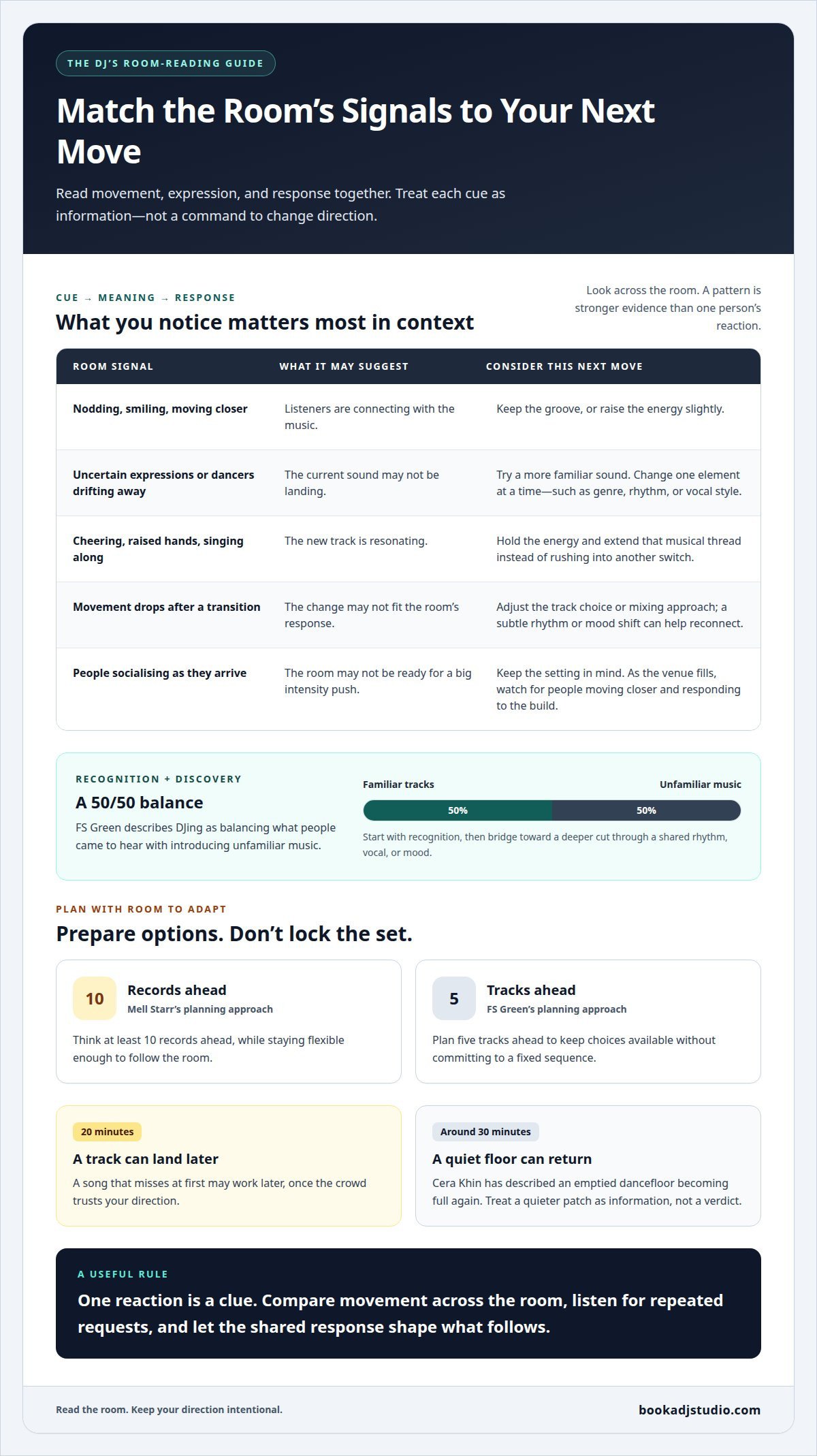
Stay flexible with your plan. Arrive early, observe the venue, and adjust your selection to the room. Test an unfamiliar track between two songs that already match the crowd’s energy. Watch for dancing, people turning toward the floor, or a sudden drop in movement. Mell Starr recommends thinking at least 10 records ahead; FS Green sometimes plans five tracks ahead. That preparation gives you options without locking you into a fixed sequence.
At a wedding or private event, use requests and reactions to serve the occasion, including moments tied to the hosts or guests. In a club, read the room’s response to the music and build around its shared energy. In either setting, fit each request into the wider mood instead of treating it as an automatic next track.
Common mistakes include following every request, sticking rigidly to a prepared set, and changing genres after one person leaves. One reaction is only a clue. Look across the room, listen for repeated requests, and compare the dancefloor’s movement before switching direction. Don’t panic when the floor thins; Cera Khin advises staying connected to your music and trusting the room can return.
For mixed crowds, find a musical bridge rather than choosing one group over another. Start with a familiar track, then test a less familiar style in a compatible transition. If one group responds to the groove while another recognises the melody, you can bring different tastes into the same moment. Keep requests in the rotation when they fit, and let the room’s response shape what follows.
2. Matching music selection to audience reactions
Choose tracks by combining what you see with what you hear. If people are nodding, smiling, and moving closer, keep the groove or raise its energy slightly. If faces look uncertain or dancers drift away, shift toward a more familiar sound. Change one musical element at a time, such as genre, rhythm, or vocal style, so you can read the response. Reading the crowd for DJs means connecting those reactions to deliberate track choices.
Balance recognition with discovery. FS Green describes DJing as a 50/50 balance between playing what people came to hear and introducing unfamiliar music. Start with a recognisable track, then bridge into a deeper cut through a shared rhythm, vocal, or mood. A popular-song remix can reconnect with listeners without abandoning your sound. A track that misses initially may land 20 minutes later, once the crowd trusts your direction.
How should DJs choose and transition tracks based on crowd reactions? Match the next track’s tempo and energy to the room’s response, then use a compatible phrase, beat, or breakdown to make the transition feel intentional. If the floor responds strongly, extend that musical thread. If engagement fades, pivot toward a sound the room already welcomes.
Fashion can offer clues, not guarantees. Clubwear associated with a particular scene may suggest relevant genres, but confirm the hunch through movement and expression. Treat style as one signal alongside the music’s actual effect. A well-dressed crowd may still want familiar singalongs, while understated listeners may embrace adventurous selections.
DJUCED’s Intelligent Music Assistant can serve as a prompt when you’re weighing possible tracks. Treat its suggestions as options, then choose based on the room, your mix, and the direction you want to build. A key part of reading the crowd for DJs is testing your choices in context. Rehearse transitions and sharpen your selection in a focused DJ practice space.
3. Recognising dancefloor engagement
Look up from the mixer and scan the room, not just the front row. Notice who is moving toward the dancefloor, who is already dancing, and who is heading out. Nodding heads, tapping feet, relaxed smiles, and open body language can signal connection. Compare these cues with the crowd’s overall age range and energy. One person’s reaction is a clue; a pattern across the room is stronger evidence.
Beginner DJs can practise by playing a short set for friends and observing how their reactions change between tracks. Keep a simple mental note: which song drew people closer, which held their attention, and when movement dropped? Remember to look up while mixing. Learning to read faces and body language alongside the sound helps connect a track choice to its effect.
Build momentum in small steps. Choose a track that maintains the floor’s current energy, then raise the intensity slightly if people keep moving. Guide listeners through shifts in mood rather than jumping abruptly from a laid-back groove to peak-time pressure. If dancers disengage, adjust the song choice or mixing approach. A subtle change in rhythm or mood can help you find the room’s pulse again.
Read the setting as well as the dancers. Early arrivals may be socialising, so pushing the volume or intensity too soon can make conversation difficult and send them away. As the venue fills, watch whether guests move closer to the dancefloor and respond to the build. The same club can have a different shared vibe on another night, so let the room in front of you guide your decisions.
Don’t try to force everyone to stay. FS Green advises focusing on the people who remain and enjoy the music, instead of chasing those who leave. Cera Khin has described an emptied dancefloor becoming full again after around 30 minutes. Treat a quieter patch as information, not a verdict. Keep observing, make a considered adjustment, and give the room space to respond.
4. Reading crowd reactions to track changes
A track change gives you a fresh signal. Watch the room as the new groove, vocal, or tempo arrives. Cheering, raised hands, and singing along suggest the track is resonating. If dancers keep moving through the transition, hold that energy instead of rushing into another switch. Connect the audience’s response to the musical choice that prompted it.
Pay attention to when the reaction happens. A cheer during a familiar vocal may show that the hook landed, while movement across the floor can suggest the rhythm is working. Notice whether people respond at the drop, during a breakdown, or after the beat returns. Those moments help you understand which part of the track is making the connection.
Separate a brief reaction from a wider shift. One raised hand is a cue, not a verdict. Look for several responses together: singing, more people joining the floor, and dancers staying through the next phrase. If those signs appear, extend the musical direction with a compatible track. If the energy falls after a change, adjust your next selection or soften the transition.
Make mixing decisions that leave room to observe. A smooth blend can preserve momentum, while a deliberate breakdown can give the crowd space to respond. For example, if singing builds during a vocal hook, avoid cutting away before the moment resolves. If dancers lose energy after a sharp tempo shift, use a transition that reconnects the new track with the groove they were following.
After each change, connect cause and effect: remember the track, the transition, and the audience’s response. That simple review helps you spot patterns across a set, rather than guessing from one reaction. Practise and refine your track transitions until your choices feel deliberate and responsive.
Book a DJ Studio
Book a DJ Studio gives you space to practise reading audience cues before your next set. Use Hourly Studio Access or Session Packages to rehearse track changes, test transitions, and sharpen your mixing decisions in a focused studio environment. Audio Recording and 4K Video Recording let you capture a session and review how your selections and transitions flow.
Use a practice run to notice where you build energy, where a change feels abrupt, and how confidently you move between familiar and unexpected tracks. Reviewing a recording can help you refine your set and prepare to respond with more intention behind the decks.
For your next focused practice session, contact Book a DJ Studio.
Make Your Next Set a Creative Leap
Your next set is a chance to turn observation into instinct. Before you play, choose one element to experiment with, such as a slower build or an unexpected transition. Afterward, note what held your attention and what surprised you. That review gives your next practice session a clear direction without locking you into a formula.
Reading the crowd for DJs isn’t about guessing every reaction. It’s about staying curious, making deliberate choices, and letting the music guide you toward your own signature. Give yourself room to test ideas, refine your timing, and grow more confident behind the decks.
Ready to shape your next session? Contact Book a DJ Studio and keep building your sound.
Frequently Asked Questions
How can DJs assess a crowd’s energy and musical preferences?
Reading the crowd for DJs starts with noticing which musical details hold attention. Listen for reactions to vocals, percussion, and changes in rhythm, then compare them across several tracks. For example, a crowd that responds to a strong bassline but quiets during long vocal sections may prefer a more groove-led direction. Use that pattern to guide your next selection.
What signs show that a dance floor is responding well or losing interest?
Look for a change in the room, not just one person’s reaction. Singing or cheering can show that a hook connects, while people turning away or leaving the floor may signal fading interest. Notice when the shift happens: during a breakdown, after a tempo change, or when a vocal ends. That timing can help you decide what to adjust next.
How can DJs adapt their set for different venues, events, and age groups?
Adapt to the purpose of the event and the room’s response, rather than assigning a genre to an age group. A private celebration may call for recognisable songs tied to the occasion, while a club set can allow more gradual exploration. Consider whether guests are socialising or ready to dance, then adjust your track choices and energy to suit the setting.
How can DJs balance reading the crowd with their planned set and personal style?
Keep your set plan flexible by preparing alternate tracks for transitions that might not land. Reading the crowd for DJs also means knowing which elements can change while your musical identity stays intact. You might shift the order, choose a different vocal, or hold the energy steady. Make one adjustment, listen closely, and let the response shape your next move.