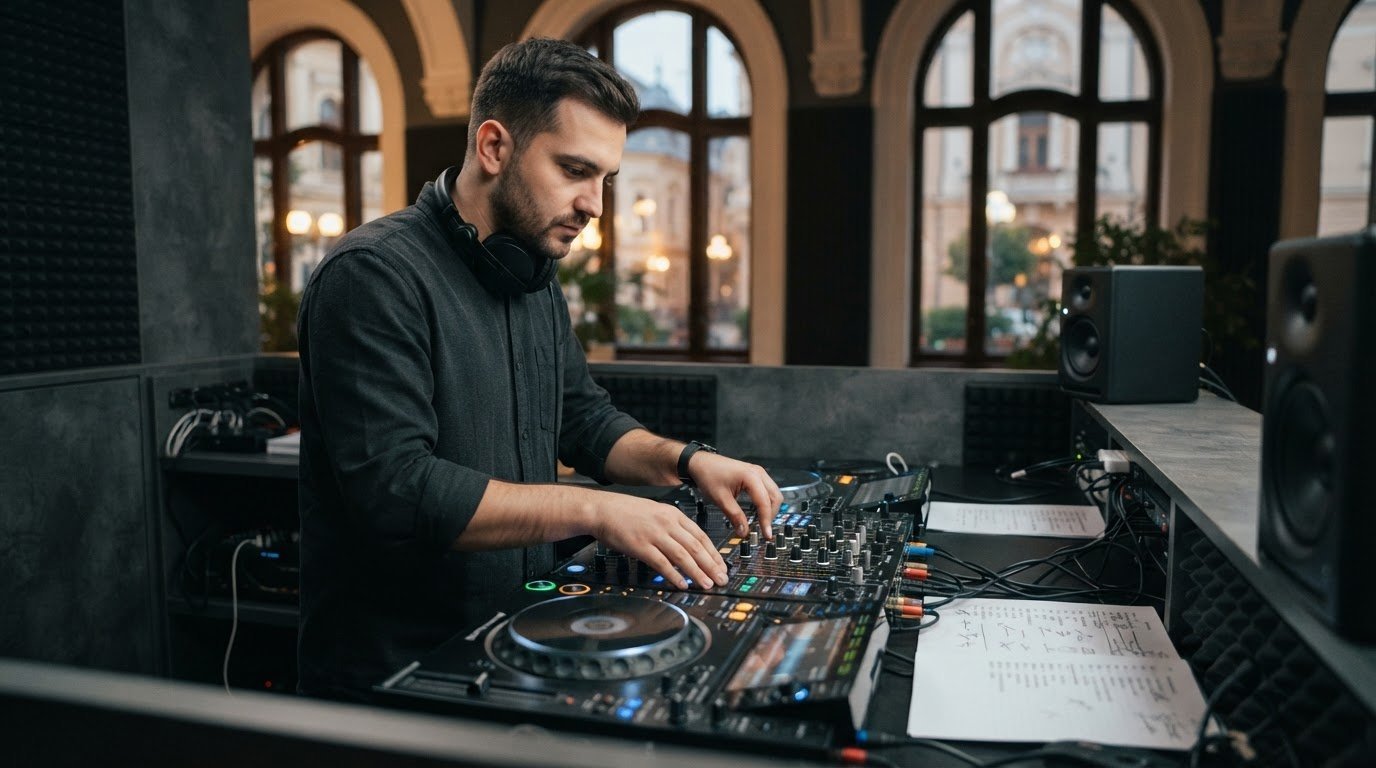

What if your next hour behind the decks could teach you more than an evening of aimless mixing? A focused dj practice routine gives every session a clear purpose. If you keep reaching for the same transitions or can’t tell whether your technique is improving, you’re not short on passion. You need a plan that turns practice into progress.
Build a repeatable routine around one skill at a time, then listen back with a specific question in mind. You’ll learn how to sharpen beatmatching and phrasing, make more intentional track selections, and set a clear goal for your next session. The structure below adapts to different schedules and setups, with practical ways to review your mixes and notice what’s improving. Each focused session gives you a clearer sense of what to practise next, so you can prepare for a set with more confidence and musical direction.
Key Takeaways
- Make your dj practice routine target one specific performance skill instead of defaulting to familiar transitions.
- Match each skill gap with a focused drill, then listen for the result using tracks you know well.
- Choose between drills, free mixing, and full-set practice based on what you want to build; each format has a different purpose.
- Use a repeatable sequence of goal-setting, warm-up, focused practice, play-through, and review to make progress easier to track.
- Practise in a dedicated Timișoara DJ booth when you want time on professional equipment, and consider optional recording to review your set.
DJ Practice Routine Basics: Practise With a Clear Goal
A dj practice routine is repeatable, focused work aimed at improving a specific performance skill. Instead of simply playing track after track, choose what to practise, decide what success will sound like, and review what happened.
Aimless mixing can be fun, but it often brings you back to transitions and track choices you already know. That feels comfortable, yet it may leave a weak phrase change or hesitant cue adjustment untouched. Structure gives your practice direction without dictating your sound. You’re still free to experiment, but each session has a clear reason.
For another perspective on building DJ skills through practice, watch this video:
What should a DJ practise in one session?
Pick one primary skill: phrasing, transitions, track selection, or cue control. Then set an outcome you can check before you stop. For example, practise bringing in a familiar track at the start of a phrase, or test whether a transition stays smooth from the first beat to the blend-out. If beatmatching needs attention, learn about beatmatching and listen for whether the tracks stay aligned throughout the blend.
Keep the goal narrow enough to focus. Use tracks you know so you can hear the technique clearly instead of decoding unfamiliar arrangements at the same time. After the drill, leave room for free mixing: explore a musical idea or try a pairing you haven’t used before. Let experimentation complement focused work, not replace it.
How often should you practise DJing?
Choose a rhythm you can maintain, not an ambitious daily target that quickly becomes another source of pressure. Fit practice around your available time and energy. A brief session can still move you forward if you work on one clear skill and finish with a quick review.
Consistency makes it easier to notice patterns: what’s becoming more reliable, what still feels awkward, and what deserves attention next time. Write down one observation and one goal for your next session. Each time you return with intention, you have a clearer starting point.
Build DJ Skills With Focused Drills and Active Listening
Turn a vague intention like “get better at mixing” into a drill you can assess. Pair one skill gap with a simple exercise and a listening check. Start with familiar tracks, so you can focus on what your hands and ears are doing instead of decoding a new arrangement at the same time.
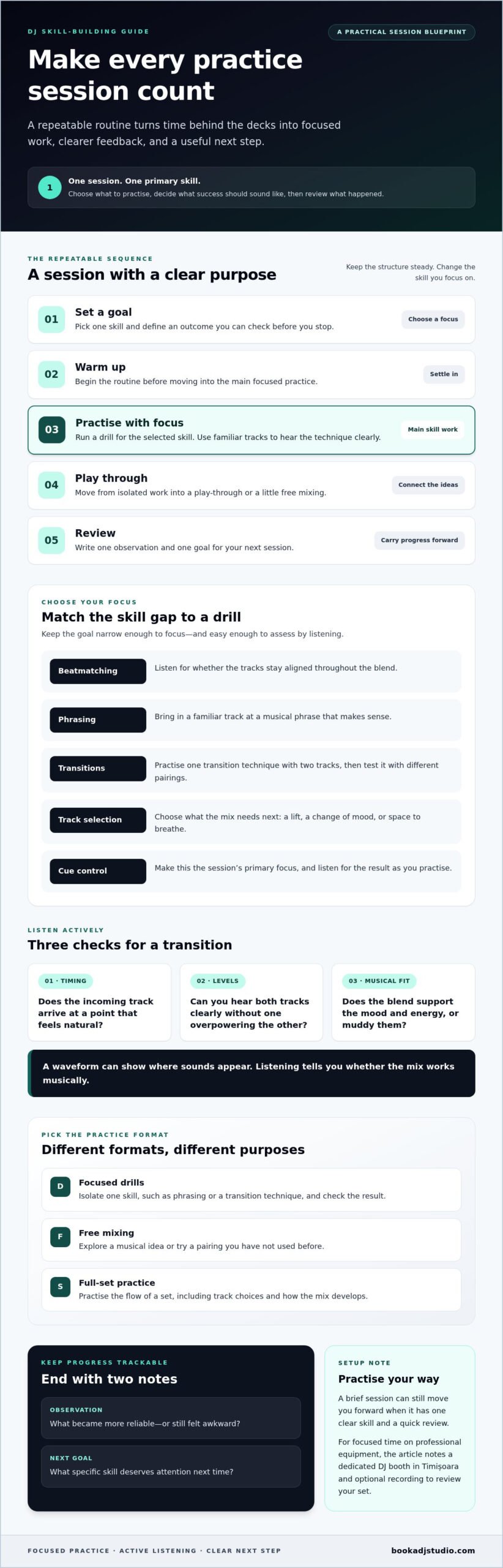
Deliberate listening helps you catch phrase alignment, changes in energy, timing slips, and level imbalance. A waveform can show you where sounds appear, but listening tells you whether the mix works musically. Look at the screen when it helps, but don’t let it make every decision. Listen for how the music moves.
Which DJ drills improve transitions and phrasing?
Before attempting a full set, choose two tracks and identify where their sections fit together. Practise bringing in the second track at a musical phrase that makes sense, then focus on one transition technique. Repeat the same technique with different track pairings. That variation helps you test whether you understand the musical timing or have simply memorised one combination.
After each pass, listen for:
- Timing: Does the incoming track arrive at a point that feels natural?
- Level balance: Can you hear both tracks clearly without one overpowering the other?
- Musical fit: Does the blend support the mood and energy, or muddy them?
Use tracks you know first. Once the transition feels controlled, try a pairing with a different arrangement or energy to test how well the technique carries over.
How can track preparation improve your mixing?
Preview tracks and organise a small practice selection around compatible tempo, energy, or mood. You don’t need a complicated system. A short group of familiar tracks makes it easier to compare how different choices shape the flow.
Then practise choosing the next track while the current mix is still playing. Ask yourself what the set needs next: a lift, a change of mood, or space to breathe? Make the selection without interrupting your blend. This trains your ear and musical judgement alongside your hands.
Keep the setup simple. Your dj practice routine should work with the equipment and software you already use, rather than depend on a particular feature. If you want a dedicated booth for focused sessions, explore DJ studio access in Timișoara as one practical option for practising on professional equipment.
Compare Solo Drills, Free Mixing, and Full-Set Practice
Each practice format trains a different part of your performance. A focused drill helps you work on a specific technique. Free mixing gives you room to explore combinations and follow your instincts. A continuous set tests whether you can make musical choices and maintain direction without stopping. Choose the format based on what you want to improve today, rather than relying on one format every time you practise your dj practice routine.
| Format | Purpose | Best use | Review method |
|---|---|---|---|
| Focused drill | Strengthen one technique | Work on a transition or control habit that feels inconsistent | Compare attempts for timing, control, and consistency |
| Free mixing | Explore musical ideas | Try unexpected track pairings and discover new directions | Note which combinations feel exciting or lose momentum |
| Full-set simulation | Practise performance flow | Prepare for a gig or build confidence playing continuously | Review pacing, selection, and musical direction afterward |
When should you practise one technique at a time?
Choose an isolated drill when you can name the issue you want to solve, such as a transition that regularly feels rushed or a control movement that disrupts your blend. Keep the exercise narrow. Repeat the same transition and change one factor, such as the track pairing, so you can hear what affects the result. Don’t mistake familiarity for consistency. Move on when the technique works across variations, not just when one attempt feels comfortable.
Free mixing has a different role. Use it to follow a musical hunch, test combinations, or find a fresh direction for your sets. Its strength is creative discovery; its limitation is that it may not show whether a specific technical weakness is improving. Note a useful idea, then turn it into a focused exercise later.
When should you simulate a full DJ set?
Play without stopping when you’re preparing for a gig or want to practise the full arc of a set. Focus on track selection, pacing, and maintaining musical direction. If a small mistake happens, keep moving instead of restarting. Recovering in the moment is part of performance practice.
Review after the run. Identify where energy dipped, a selection felt out of place, or a transition needs work. Pick one priority for your next focused session. Set simulation reveals what to practise, and drills give you a way to work on it.
Create a DJ Practice Routine You Can Repeat and Measure
A repeatable session doesn’t need a rigid timetable. Build it around a simple sequence: choose a goal, warm up, drill, play, then review. Adjust the time you give each step to fit your schedule and energy. The value comes from practising with intention, not from hitting an arbitrary duration.
How do you structure a short practice session?
Start by naming one skill and choosing tracks that let you focus on it. If your goal is cleaner phrasing, for example, pick familiar tracks with sections you can recognise by ear. Warm up by getting comfortable with your setup, then move into the main practice block and repeat one targeted exercise. Keep your attention on the goal instead of adding extra techniques mid-session.
Finish with a brief play-through. Try the skill in context, then write down what improved and what needs another attempt. A familiar setup can also help you compare sessions fairly. Changing equipment and workflow isn’t always useful when your goal is to measure progress on a specific technique.
How can you track DJ progress without overthinking it?
Keep a simple practice log. A few lines are enough to make the session a useful reference for next time:
- Date: When you practised.
- Goal: The skill or outcome you focused on.
- Observation: What felt stronger, or what still needs work.
- Next action: The specific exercise you’ll return to.
Use recordings selectively. Playback can reveal timing or flow that’s hard to judge while you’re mixing, but review it with a question in mind, such as whether the transition felt rushed. If you practise in a studio, ask whether audio recording is available as an optional add-on rather than assuming it’s included with access.
Keep the cycle moving: one observation becomes the next session’s goal. For focused practice in a professional DJ booth, explore DJ studio access in Timișoara. This dj practice routine stays flexible while giving you a clear way to spot progress and decide what to work on next.
Take Your DJ Practice Routine Into a Professional Studio
A dedicated booth can make your practice feel closer to performance conditions. It gives you space to focus on your set, work on professional equipment, and see how your habits translate beyond your usual setup. That can be useful when preparing a set or practising without interruption. A studio won’t replace focused practice, but it can give your routine a different environment.
What can you practise in a dedicated DJ studio?
Use the booth to follow your routine: warm up, work on your chosen skill, then play through a section or full set. You might practise adapting to a different setup, refining transitions, or maintaining musical direction without stopping. Book a DJ Studio provides studio access in Timișoara, not DJ lessons or off-site equipment rental. Check the current booth equipment before your session if you need particular players, mixers, or features.
Want to see the space before deciding if it suits your practice? Browse the DJ studio gallery for a look at the booth.
How do you turn practice into your next performance?
Give your session a performance-focused goal, such as smoother transitions or stronger musical direction. Play continuously and practise recovering from small slips without restarting. Afterward, note one moment that worked and one adjustment to carry into your next session. That keeps your dj practice routine connected to the confidence and flow you want behind the decks.
If hearing the set back would help you assess timing or flow, ask about optional audio or 4K video recording. These are add-ons, not automatic inclusions with studio access. Recording can also support promotional content, while livestreaming setup is another available add-on.
Ready to put your routine into a dedicated booth? Explore DJ studio access in Timișoara and choose a session that fits your practice plans.
Make Your Next Session Count
Progress comes from practising with purpose, listening closely, and carrying one useful lesson into your next session. Choose a skill to sharpen, use drills to isolate a weak spot, and switch to a full-set run when you’re ready to test your flow. A simple dj practice routine gives your creativity direction while leaving room for discovery.
Ready to put your plan into action? Book a DJ studio session in Timișoara and practise in a professional booth designed for focused sessions and set preparation. Optional audio recording, 4K video recording, and livestreaming setup are available as add-ons, so you can choose what supports your practice goals.
Book a DJ studio session in Timișoara, bring one clear goal, and make your next set a step forward. Keep showing up, trust your ear, and let each session move your sound closer to the performance you want to deliver.
Frequently Asked Questions
How long should a DJ practice session be?
Practise for as long as you can stay focused. Choose one goal, work on it attentively, then note what you want to revisit. A brief, purposeful session can be more useful than a longer one without direction.
What should I practise first as a beginner DJ?
Start with timing and a simple transition between familiar tracks. Listen for phrase changes and bring in the next track where it feels musically natural. Add complexity once you can repeat the transition with control.
How often should I practise DJing to improve?
Practise at a pace that fits your schedule and energy. Consistency matters more than setting an unrealistic daily target. Keep a short note after each session so you know what to work on next.
Is it better to practise transitions or play full DJ sets?
Use transition drills to refine technique, and full-set practice to work on selection, pacing, and flow. Alternate formats as your goals change: a set can reveal a weak spot, then a drill can help you address it.
Can I improve my DJ skills by recording and listening back?
Yes. Playback can reveal rushed transitions, uneven levels, or changes in energy that are hard to judge while mixing. Review with one question in mind. At Book a DJ Studio in Timișoara, audio and 4K video recording are optional add-ons.
Do I need a professional DJ studio to practise?
No. Practise with the equipment you have access to. A professional booth can help when you want a focused environment for set preparation. Book a DJ Studio provides studio access in Timișoara, not DJ lessons or off-site equipment rental.
How can I make DJ practice less repetitive?
Keep the skill goal, but vary the tracks or musical direction. Try different pairings, explore a new mood, or play a continuous set after your drill. Each variation gives your ears a fresh challenge while keeping practice focused.