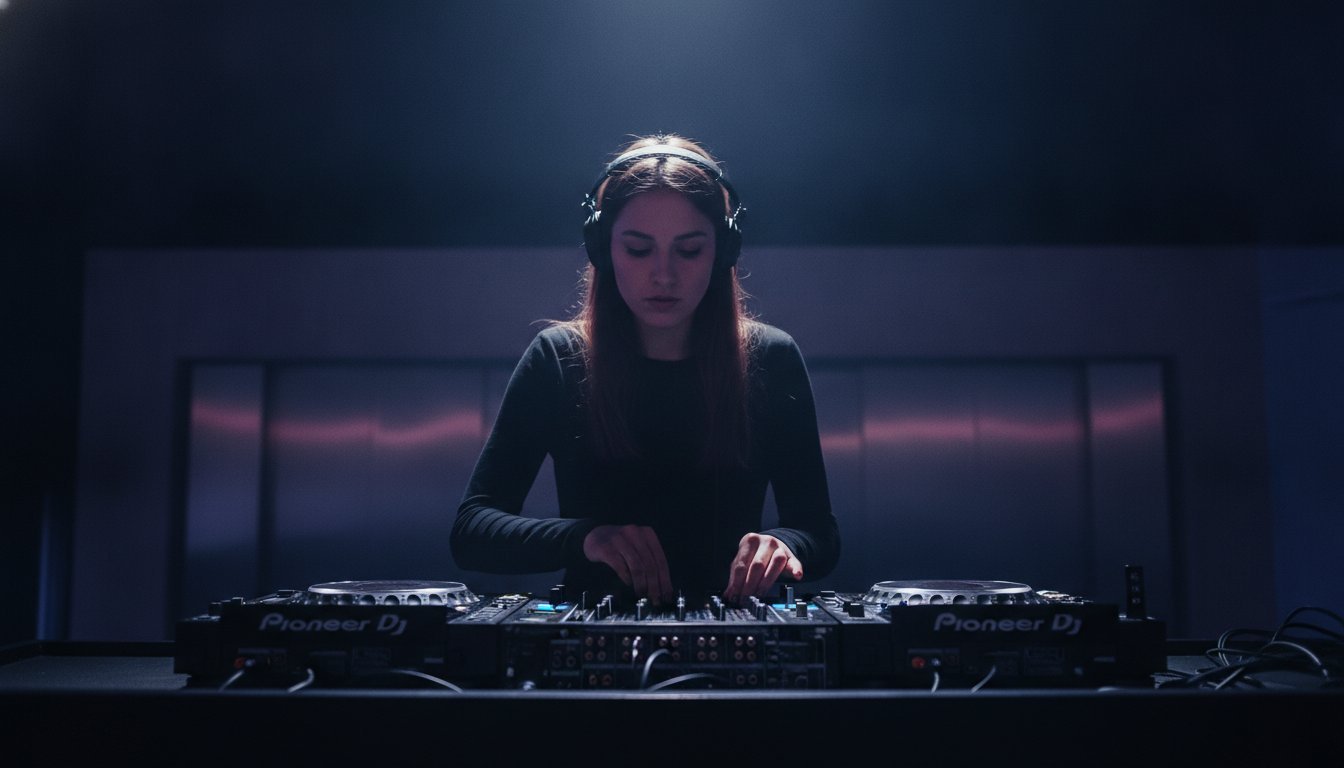

What if the biggest threat to your debut set isn’t a bad transition, but a piece of gear you’ve never touched before? 🎧 It’s the nightmare every selector faces: standing in a dark booth, staring at professional CDJs that look nothing like your controller at home. You’ve spent weeks digging for tracks and perfecting your stems in VirtualDJ 2026, but the technical anxiety is still real. We get it. That pre-gig adrenaline is a sign of your passion, but without a plan, it can turn into a trainwreck. Learning how to prepare for first DJ gig is about more than just a playlist; it’s about simulating the club environment before you ever step on stage.
This ultimate 2026 checklist is your professional roadmap to mastering your nerves and your music. 🚀 We’re going to break down everything from hardware requirements to crowd reading and capturing high-quality 4K content for your portfolio. By the time you finish reading, you’ll have the confidence to step into any booth and build a reputation that gets you booked again. It’s time to stop worrying about technical failure and start focusing on your sound. Let’s get you ready for the breakthrough you’ve been working for.
Key Takeaways
- Scope out the venue and slot energy early to ensure your sound perfectly matches the room’s vibe. 🏟️
- Learn how to prepare for first DJ gig by using the “First Five” rule to lock in your confidence. 🎧
- Bridge the gap between home and the club by practicing on professional CDJs in a simulated booth. 🎚️
- Nail the technical handover and arrival logistics to build an immediate reputation as a reliable pro. 🤝
- Capture high-quality audio and video to turn your debut into a powerful marketing tool for future bookings. 📹
Phase 1: Researching the Venue and Technical Rider
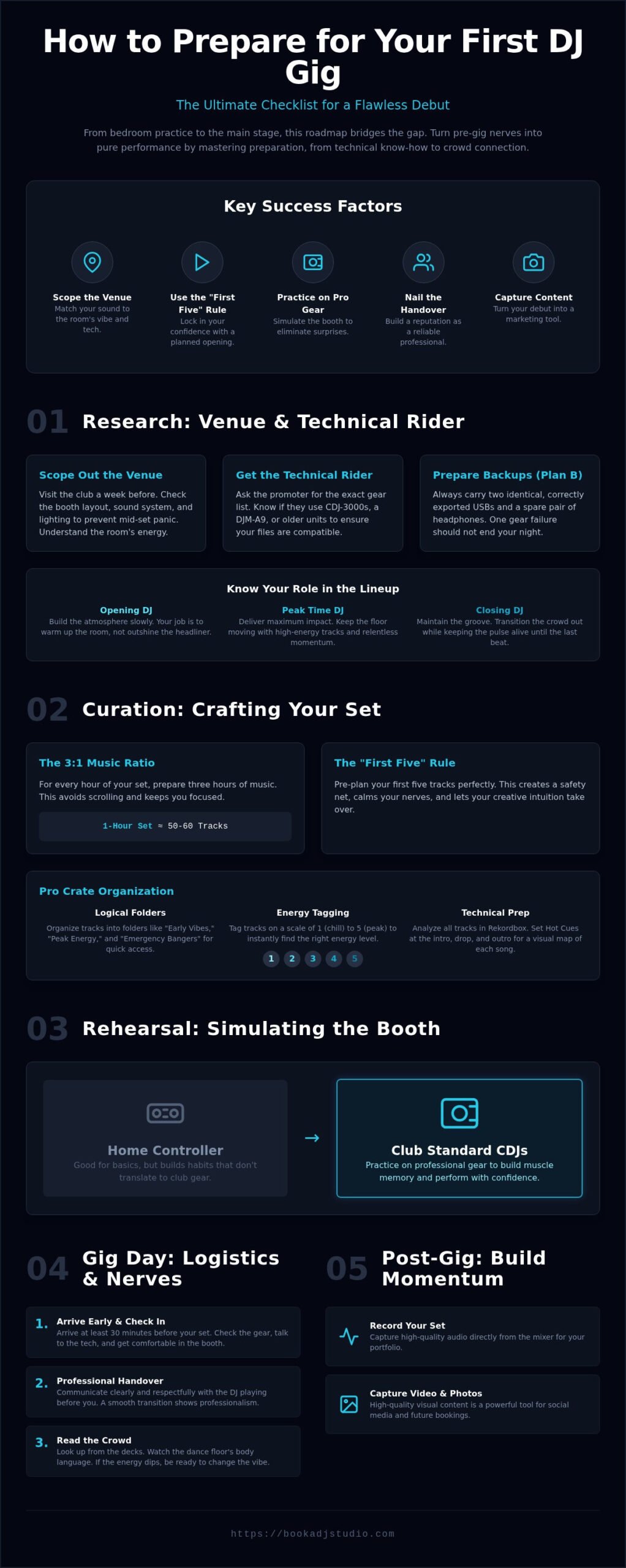
Your debut set begins long before you touch the crossfader. Success in the booth is 90% preparation and 10% performance. If you want to crush it, you need to scope out the venue at least a week before your date. Walk into the club. Stand where the crowd stands. Notice where the subs are hitting and how the sound bounces off the walls. Most importantly, get a look at the booth. Is it cramped? Is the lighting blinding? Knowing these details prevents mid-set panic. This is the essential first step in learning how to prepare for first DJ gig like a seasoned pro.
In the Timișoara scene, technical riders can vary wildly between underground spots and established clubs. Don’t guess what gear they have. Ask the promoter for a technical rider or a clear photo of the current setup. If they are running Pioneer CDJ-3000s, you need to know your USBs are exported correctly in Rekordbox. If they have older XDJ units, your high-resolution files might not load. Always carry a Plan B. That means two identical backup USBs and a spare pair of headphones. One piece of gear failing shouldn’t end your night.
Knowing Your Role in the Lineup
- Opening DJs: You are the architect of the vibe. Build the atmosphere slowly. Your job is to warm up the room and keep people moving without outshining the headliner. 🏗️
- Peak Time: This is your moment for maximum impact. Deliver high-energy tracks and keep the floor moving with relentless momentum. ⚡
- Closing Sets: Maintain the groove. Your job is to transition the crowd out while keeping the pulse alive until the very last beat. 🌙
The Technical Checklist for 2026
Hardware standards move fast. By 2026, most pro booths have integrated stem separation features, but you must confirm software compatibility first. Check if the house mixer is a Pioneer DJM-A9 or something more specialized like a Xone:96. This changes how you’ll handle your filters and effects. If you plan on bringing your own controller, like an AlphaTheta DDJ-FLX10, ask if there is physical space to set it up. Many booths are built strictly for standalone players. To avoid surprises, practice on club-standard gear beforehand so the layout feels like second nature when the lights go down.
Phase 2: Crating Your Set for Maximum Impact
Selection is your superpower. While flashy transitions look good on social media, the right track at the wrong time will still kill the vibe. When you are figuring out how to prepare for first DJ gig, your crate organization is your lifeline. Aim for a 3:1 ratio of music to set time. If you’re playing for an hour, 50 tracks is plenty. Any more and you’ll spend the night scrolling instead of performing. Structure your folders into clear categories like “Early Vibes,” “Peak Energy,” and “Emergency Bangers.” This logical flow keeps your brain sharp when the pressure is on.
Energy tagging is the pro move that separates amateurs from legends. Tag every track in your library from 1 (chill/atmospheric) to 5 (heavy/peak time). When the floor starts to swell, you can filter for “4s” and “5s” instantly. Pair this with the “First Five” Rule. Pre-plan your first five tracks to a T. These are your safety net. Once you nail those first few mixes, the adrenaline stabilizes and your creative intuition takes over. You are no longer just playing songs; you are directing the energy of the room.
The Master Playlist Strategy
Cull your library until only the gold remains. If you don’t know a track 100%, it doesn’t belong in your gig crate. Use Rekordbox to ensure every track is analyzed with accurate grid markers and BPM counts. Set Hot Cues at the intro, the drop, and the outro. This isn’t just about mixing; it’s about having a visual map of the track’s DNA. If you want to hear how these tracks actually translate to a loud environment, test your playlist in a professional studio before the gig to ensure your levels are consistent across the board.
Preparing for the Unexpected
The dance floor is a conversation. If the crowd stops responding, you need to change the topic. Keep an “Emergency” folder with three tracks that are guaranteed floor-fillers regardless of the genre. Don’t stare at your laptop or the CDJ screens. Look at the people. Are they heading to the bar? Is the energy dipping? Reading body language is a skill you only master by paying attention. If a transition feels off, don’t sweat it. Recover, drop a reliable banger, and keep the momentum moving. Your resilience is what builds your reputation.
Phase 3: The Dress Rehearsal—Simulating the Booth
Bedroom practice is where you build your foundation, but it’s also where you develop dangerous habits. Your home controller is a toy compared to the high-pressure environment of a club booth. If you want to know how to prepare for first DJ gig without crumbling under “gear shock,” you must step into a professional environment. The physical layout of a pro booth is different. The knobs have more resistance. The screens are positioned differently. You need to build muscle memory on the exact hardware you’ll face on the night.
Practice without your laptop screen. In the club, your laptop might crash, or the Pro DJ Link might fail. Can you still mix by ear? Spend at least one session with the waveforms covered. This forces you to listen to phrasing and beatmatching rather than looking at visual cues. It’s the difference between being a laptop performer and a real selector. Master this, and you’ll be unfazed by any technical glitch. This level of readiness is the hallmark of a professional.
Bridging the Gap with Professional Gear
Pro-level mixers require a different approach to gain staging. On a home controller, you might get away with “red-lining,” but on a club system, that results in distorted, painful audio. Learning the headroom of a professional mixer is vital. You should master the club standard in Timișoara before your set to eliminate “button panic.” When you know where every filter, cue, and loop button is by touch, you can focus on the crowd instead of the equipment. 🎚️
Recording for Self-Correction
You are your own toughest critic. Record your entire rehearsal set from start to finish. Don’t stop if you make a mistake. Keep going and see how you recover. When you listen back, pay attention to volume inconsistencies and EQ clashes. Did the bass from Track A overwhelm the melody of Track B? These subtle errors are invisible while you’re mixing but obvious to the crowd. Record your promotional set in a studio environment to catch these mistakes early. Set a timer for your exact set length to practice your pacing. This is how to prepare for first DJ gig with the precision of a headliner. 🎧
Phase 4: Gig Day Logistics and Nerve Management
The day of your debut is finally here. All those hours of crate digging and studio practice are about to pay off. But even the best track selection won’t save you if you’re frazzled by bad timing. Arrive at the venue at least 30 to 45 minutes before your set starts. This isn’t just about being polite. It’s about observing the room. Watch how the current DJ is playing. See which parts of the floor are moving. This is a critical part of how to prepare for first DJ gig because it allows you to adjust your energy before you even touch a dial.
Manage your adrenaline carefully. It’s tempting to grab a few drinks to calm the shakes, but alcohol is the enemy of technical precision. Stay hydrated. Take deep breaths. Remember that the staff and the sound engineer are your best friends. A respectful DJ who says “thanks” to the bartender and coordinates with the sound guy builds a professional reputation instantly. If the engineer tells you to turn down your gains, listen. They are protecting the system and your sound quality.
Developing mental resilience is key to a successful performance. For a unique way to practice staying calm under pressure, you can visit Mysterium to explore their immersive escape rooms, which offer a high-stakes environment similar to the intensity of a live set.
The Soundcheck Protocol
Step into the booth during the handover and check your monitors immediately. Don’t blast them. You need enough volume to hear your cues over the house system, but not so much that you fatigue your ears before the peak. Test your primary and backup USBs on the actual club gear. Even if you checked them at home, a club-standard environment can behave differently. If there is a lighting tech, give them a quick nod. Let them know if you have any massive drops coming up. Coordination creates a better experience for the crowd. ⚡
Overcoming Performance Anxiety
Nerves are natural. Use the “First Track” trick: focus 100% of your mental energy on that very first transition. Once you land that mix, the anxiety usually melts away. Engage with your audience. A simple smile or a nod to the front row builds a bridge between you and the floor. If you make a mistake or a “train-wreck” happens, don’t panic. Stay calm. Correct the beatmatch or fade out. Most of the crowd won’t even notice if you keep your composure. To build the confidence you need to handle these moments under pressure, book a final practice session to run through your set one last time. 🚀
Phase 5: Post-Gig Momentum—Turning One Set into Ten
Reviewing your performance is the only way to evolve. Listen to your recorded audio set with a critical ear. Did that transition at the 30-minute mark actually work? Were your levels consistent when you switched from the intro to the peak-time bangers? Be honest with yourself. This isn’t about self-criticism; it’s about refining your craft for the next stage. Every mistake you identify today is a mistake you won’t make at your next booking.
Building Your Press Kit
Content is your digital calling card. If you captured 4K footage during your set, you have enough material for a month of high-impact Reels and TikToks. Visual proof of a packed dance floor is more persuasive than any bio. Check out our studio gallery for inspiration on how to frame your performance shots and capture the energy of the booth. Upload your full recorded set to SoundCloud or Mixcloud. It proves you can maintain energy and flow for an hour, not just a 15-second clip. This consistency is exactly what promoters look for when they scout new talent.
Booking Your Next Practice Session
The best selectors never stop learning. Even after a flawless debut, there are always new techniques to master. Use the momentum from your first gig to plan your next creative evolution. Maybe you want to experiment with real-time stem separation or master a new mixer’s effects unit. Practicing these skills in a controlled environment prevents technical disasters on stage. Level up your sound in Timișoara by getting back into the booth immediately while the adrenaline is still fresh. Learning how to prepare for first DJ gig was just the beginning. Now, it’s about staying ready for the call. 🎧
Own the Booth: Your Breakthrough Starts Now
You have the roadmap. Now it’s time to execute. Mastering how to prepare for first DJ gig isn’t just about the music; it’s about the technical confidence you build before the lights go down. From scouting the venue to organizing your “Emergency Bangers” folder, every step leads to this breakthrough. The pros don’t leave their sets to chance. They simulate the pressure, master the gear, and record every second to fuel their next booking. It’s about turning that initial adrenaline into a professional reputation that lasts.
Timișoara’s premier creative hub is ready for your arrival. Practice on club-standard Pioneer DJ gear to eliminate gear shock. Use our high-quality 4K video recording to build a press kit that demands attention from promoters. Don’t leave your first gig to chance—book your pro practice session now! The stage is set. Your sound is ready. Go out there and claim your spot in the booth.
Frequently Asked Questions
What should I do if my USB fails during my first DJ gig?
Switch to your backup USB immediately. Always carry two identical, Rekordbox-analyzed drives in your bag. If the Pro DJ Link between players is down, plug your second drive directly into the other player. This redundancy is the core of how to prepare for first DJ gig. Stay calm and keep the music playing while you troubleshoot. Muscle memory from your studio practice will save you here.
How early should I arrive for my first DJ set?
Arrive at least 30 to 45 minutes before your slot starts. Use this time to check the booth layout, meet the sound engineer, and gauge the room’s current energy. Watching the previous selector helps you plan a smooth transition and ensures you aren’t rushing when it’s time to plug in. Professionalism starts with being present and prepared. Use those extra minutes to visualize your first mix.