

Your first paid DJ set doesn’t have to happen under nightclub lights. The path from hobby DJ to professional gigs can begin at a house show or private event, then lead to bars and nightclubs as you sharpen your confidence, crowd-reading, and track selection. Each setting gives you a different way to gain experience and show you can hold a room.
You already know that great mixing is only part of the craft. Choosing the right gig also means understanding the crowd, atmosphere, and practical demands of each event. This guide explains how house shows and private events can open doors, what to expect from nightclub and bar sets, and which skills can help you step up. Find the format that suits your sound, then build a stronger live presence one set at a time.
Key Takeaways
- Use house shows and private events to build live experience while learning the practical demands of each booking.
- Explore bars and nightclubs to develop your crowd-reading skills and adapt your set to a live venue.
- Strengthen your mixing, music selection, and equipment preparation so your performance feels intentional, not just a playlist.
- Create a focused mix demo and portfolio that make your sound, style, and readiness easy for potential bookers to understand.
1. House shows and private events
A house show can give you a first live crowd without the scale of a nightclub. Private bookings, such as weddings or corporate events, require more planning: wedding sets can last multiple hours, and the work may include transporting equipment, setup, and breakdown. Looking at established services like paramountdjs.com.au shows how professional wedding and corporate entertainment treats each booking as a complete performance, not just time behind the decks.
For a first paid gig, take these steps:
- Choose a format you can deliver confidently, such as a house party with a clear musical brief.
- Prepare a short demo that reflects the event’s mood, then share it with potential hosts or local contacts.
- Agree on the set length, music expectations, payment, equipment responsibilities, and setup arrangements before accepting.
- Prepare crates for different energy levels, test your signal chain, and arrive with a backup plan for playback.
For a private event, confirm who provides the sound system and manages the schedule. A wedding may call for smooth transitions between distinct moments, while a house show may leave more room for spontaneous requests. A voluntary tip jar can suit a house show or private event, but keep tipping optional and unobtrusive.
In Romania, don’t assume a private booking automatically settles music copyright responsibilities. Requirements can depend on the event and its arrangements, so agree in advance who handles any applicable permissions and use music obtained through legitimate channels.
Equipment and software costs vary by setup, from a basic controller and laptop to a more complete rig and paid software features. A workable budget depends on what you already own, the formats you play, and whether you need to bring sound equipment. Start with reliable playback and headphones, then add gear when real bookings call for it.
The main risks are unclear expectations, long sets, transport issues, and equipment failure. Reduce them with a written agreement, a realistic schedule, secure packing, and tested backup audio. Keep your first booking manageable, then use each event to refine your preparation.
2. Nightclub and bar DJ gigs
Bars and nightclubs can move your DJ career into a faster, more demanding environment. You’ll read the crowd in real time, maintain energy through changing sets, and coordinate with venue staff. Many nightclubs have PA systems DJs can connect to, which can simplify setup. Confirm connection requirements and the soundcheck plan before the booking, then prepare your own cables and music library.
Build your set around the venue’s audience, not just your favourite tracks. A bar may need an easygoing opening mood before the floor fills, while a club set may call for sharper transitions and more deliberate shifts in energy. Prepare flexible crates, watch how people respond, and adjust your selections without abandoning your sound. Consistent preparation and communication can help turn a strong first set into a recurring venue relationship.
Set your fee based on set length, preparation, travel, equipment responsibilities, and the venue’s needs. Put the agreement in writing, covering performance times, payment terms, cancellation arrangements, setup access, and who supplies the sound system. Clear terms help both sides understand what the booking includes.
In Romania, build venue contacts through local nights, DJ communities, referrals, and direct, professional messages to bar or club bookers. Share a concise demo suited to each venue, then follow up with a specific date or set concept rather than a generic pitch. A reliable opening set can lead to repeat bookings when you arrive prepared and communicate clearly.
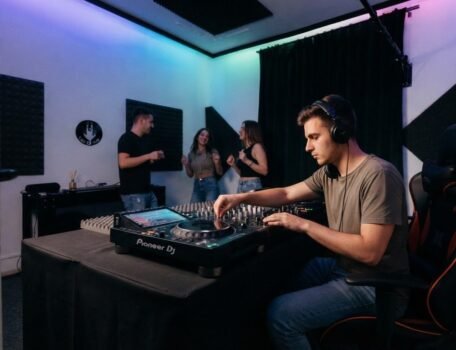
Before approaching a venue, rehearse transitions and check your gain staging in a consistent setup. A dedicated DJ practice space can help you refine a club-ready set and record a polished demo. Keep your pitch focused: show the booker your sound, the atmosphere you can create, and how your set fits their room.
JT Quik said he performed at a Kansas City nightclub a few times a month and described performing in front of audiences of a couple thousand people. He estimated that 95% of the people DJs deal with in his work environment are drunk, high, or both. For demanding rooms, plan your set and communication around the crowd in front of you, and agree on venue support and expectations before the night begins.

3. What skills and equipment does a professional DJ need?
Strong mixing starts with musical judgment, not a stack of popular tracks. Kansas City DJ JT Quik argued that shuffling the top 100 songs alone doesn’t make someone a better DJ. Build transitions around tempo, phrasing, energy, and the room’s response. Learn to blend cleanly, manage gain, and recover calmly when a transition misses.
Preparation gives those skills a reliable foundation. Organize music into crates by mood, energy, and use, such as warm-up tracks or peak-time selections. Check file quality before adding tracks, and keep playlists available offline. JT Quik said he wouldn’t play a low-quality MP3 through a high-end sound system. Your audience hears the source as well as the speakers.
A practical setup depends on where you perform and what the venue supplies. A controller or decks, mixer, headphones, laptop, DJ software, and dependable cables make up a common working rig. Learn the input and output connections before you arrive. Test your headphones, cueing, levels, and library on the exact setup you’ll use. At a venue with a PA, confirm the signal path and bring essential adapters.
- Read the room: Notice whether dancers respond to familiar hooks, deeper cuts, or a shift in tempo.
- Control transitions: Practise phrasing and EQ changes so basslines don’t clash.
- Protect sound quality: Use clean audio files and avoid pushing levels into distortion.
- Prepare for failure: Keep a backup playlist and know how to restore audio after a software or cable issue.
Professional habits matter as much as gear. Label crates clearly, arrive ready to soundcheck, and communicate with the host or sound technician. Treat every set as a complete performance, from the opening track to the final handoff. That discipline turns technical ability into a dependable live experience.
The estimate can help DJs assess equipment costs separately from those two expenses and consider what their working setup requires.
JT Quik said he would not play a low-quality MP3 over a 100,000 sound system. His point reinforces that equipment cannot compensate for a poor-quality file, making careful audio selection part of a professional DJ’s preparation as well as a matter of sound quality.
4. How can a hobby DJ build a professional DJ portfolio and mix demo?
A strong DJ portfolio gives bookers a quick sense of your sound, versatility, and live presence. Start with one focused mix suited to a specific setting, such as a bar warm-up or a house party. Let your track choices and transitions tell a clear story instead of trying to represent every genre you play. A focused demo can help you move from hobby DJ to professional bookings by showing what you bring to a particular room.
Plan the demo before you press record. Choose a mood, map out a beginning and peak, and select tracks that let your mixing skills come through. Record a continuous performance, then listen for abrupt transitions, uneven levels, long pauses, and dips in energy. Rework the weak spots before sharing the mix.
- Lead with your sound: Write a short description of the genres and atmosphere your mix delivers.
- Show your range: Add a second mix only if it demonstrates a distinct style or event format.
- Keep the presentation clean: Use a consistent DJ name, a clear profile image, and concise contact details.
- Make it easy to review: Share a playable recording with a short track or set description.
Add visuals when they strengthen the story. A video clip can show your hands on the mixer, your cueing, and how you control transitions. Keep the frame focused on the performance, with clear audio and lighting that lets viewers see the decks. A polished short clip can complement a full-length audio mix, not replace it.
Build proof from real gigs, too. Ask a host for permission to capture a short moment at a house show or private event, then use it alongside your demo. Keep each portfolio item relevant to the venue you’re approaching. As you move from hobby DJ to professional work, make it easy for a bar booker to find a suitable mix and for an event host to hear the atmosphere you can create.
Ready to capture a clean set? Record your DJ demo in a dedicated studio, then choose the strongest audio or video moments for your portfolio.
Book a DJ Studio
Book a DJ Studio gives you a dedicated space to sharpen a set and create portfolio-ready recordings. Use Hourly Studio Access to rehearse a specific mix, or choose Session Packages for ongoing preparation. Add Audio Recording for a clean demo, or 4K Video Recording to show your performance and technique on camera.
Use Book a DJ Studio in Timișoara when your next step is focused practice or a polished mix to share with venues and event bookers. A recorded session also lets you review transitions, levels, and pacing before your next gig. Set a clear goal for the session, such as refining a warm-up set or capturing a new demo.
Contact Book a DJ Studio to discuss your next recording or practice session.
Make Your Next Set a Turning Point
The shift from hobby DJ to professional work isn’t one dramatic leap. It’s a series of deliberate choices that make your sound, preparation, and presence more dependable. For your next session, choose one skill to sharpen, such as smoother phrasing, stronger opening selections, or cleaner gain control. Then listen back critically and carry that improvement into your next performance.
Build momentum by treating each mix as a new opportunity to show your identity. Your goal isn’t to copy another DJ’s formula. It’s to make your own taste unmistakable while staying responsive to the room. Keep creating and refining, and let every set move your craft forward.
Give your next mix the space and focus it deserves. Plan your next DJ studio session and take another confident step toward the bookings you want. Your sound is ready to go further.